
![Maurice Ravel: Daphnis et Chloé—Charles Munch conducting the Boston Symphony Orchestra, with the New England Conservatory Chorus (Analogue Productions, RCA Living Stereo 45 RPM Series) [2026]](https://images.squarespace-cdn.com/content/v1/55787f0ae4b02f0501debbeb/1771200413318-INURMELNBDKTXJNVEQDW/a.jpg)
Maurice Ravel: Daphnis et Chloé—Charles Munch conducting the Boston Symphony Orchestra, with the New England Conservatory Chorus (Analogue Productions, RCA Living Stereo 45 RPM Series) [2026]
Recording History
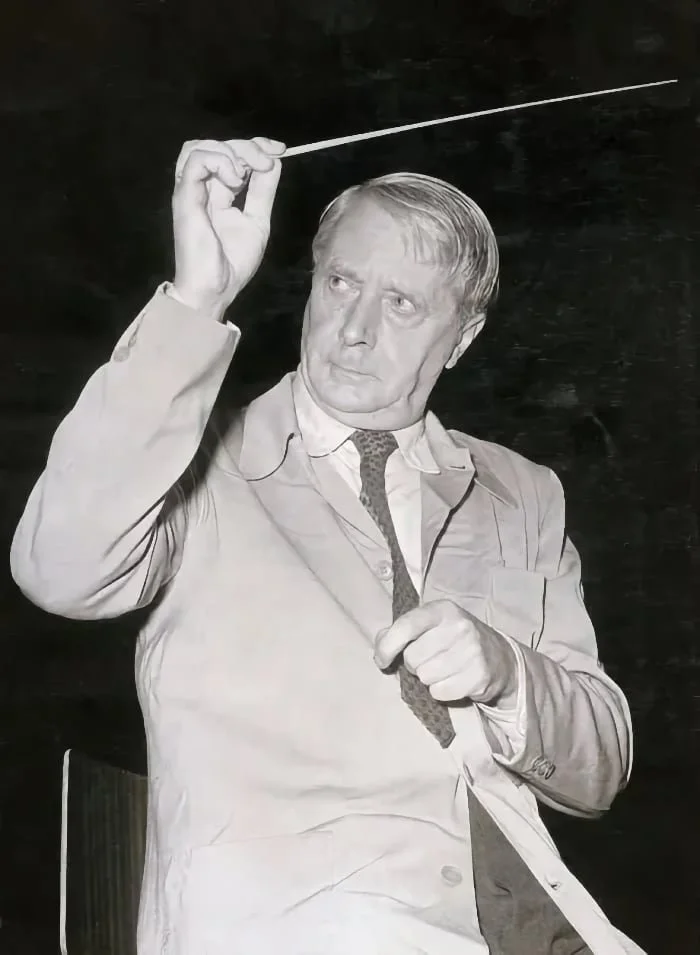
As part of its new RCA Living Stereo 45 RPM series, Analogue Productions has revisited one of the most celebrated orchestral showpieces of the early stereo era: Daphnis et Chloé by Maurice Ravel, performed by the Boston Symphony Orchestra under Charles Munch, with contributions from the New England Conservatory Chorus. Originally composed as a ballet for Diaghilev’s Ballets Russes and premiered in 1912, the work presents a Greek love story rendered in a modernistically inspired, pagan-inflected character, blending lyrical innocence with vivid orchestral colour. While Daphnis et Chloé is sometimes presented in two derived orchestral suites, this recording captures the complete ballet in its full scope.
When Acoustic Sounds founder Chad Kassem first announced the 45 RPM series, he was very deliberate in his selection process. He would not take a chance on issuing anything less than a 10++, a grading term derived from authoritative reference works such as Jonathan Valin’s The RCA Bible and James A. Mitchell’s The Golden Era of RCA Records, both staples of the Living Stereo collector community. This strict quality standard, combined with Kassem’s own experience and taste, ensured that only the most exceptional recordings, capable of fully demonstrating the sonic advantages of the format, would be included in the series.
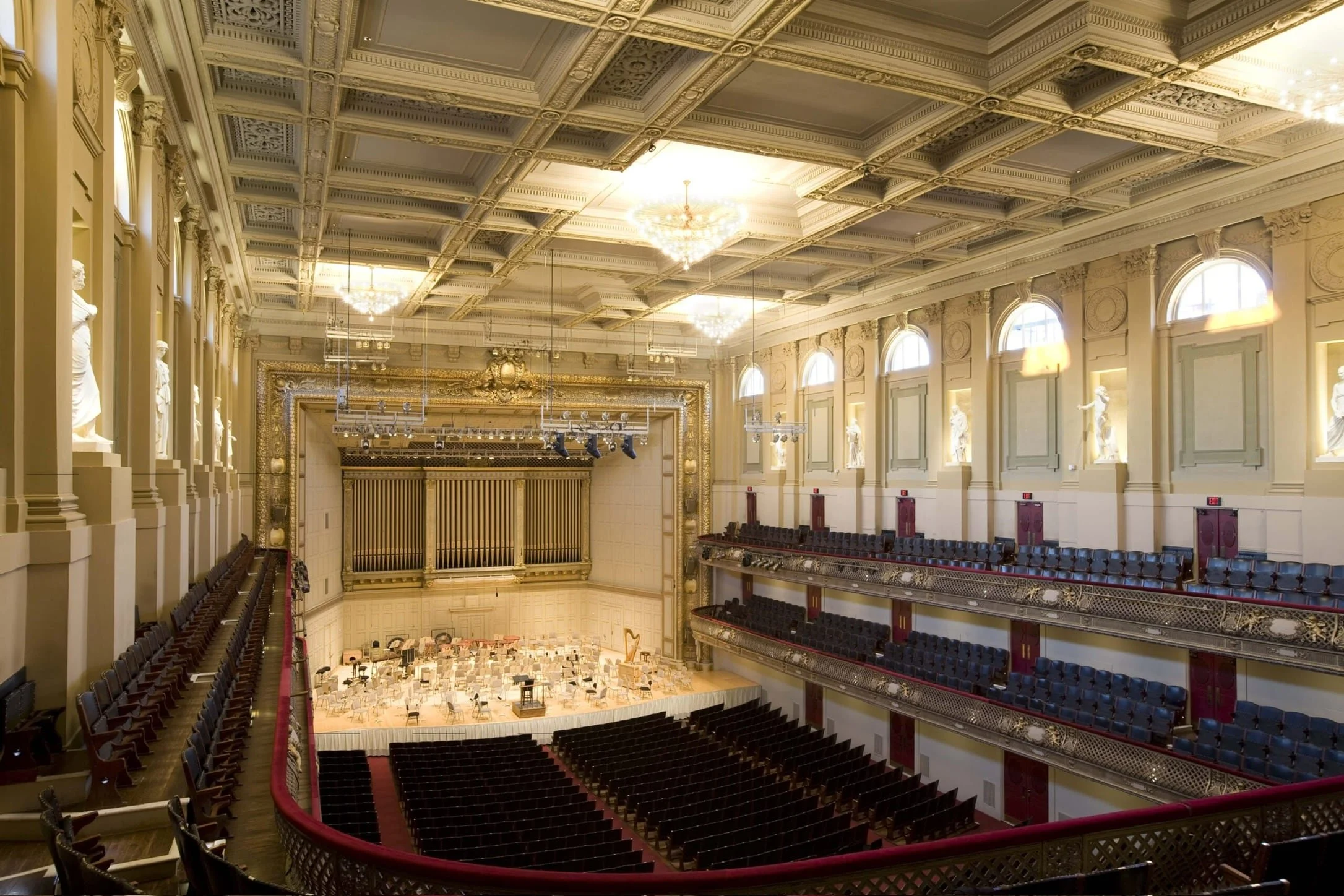
This performance of Daphnis et Chloé was recorded on January 23–24, 1955, at Symphony Hall in Boston, distinguishing it from a later stereo recording that Charles Munch made for RCA in 1961. While the hall is renowned as a magnificent venue for live performance, its acoustic characteristics could present challenges for recording engineers. In this early Living Stereo session, however, the team skillfully overcame these obstacles, capturing the full orchestra and choral forces with clarity, balance, and a striking sense of space — a remarkable achievement for the technology of the time. Produced by John Pfeiffer and engineered by Leslie Chase, it stands as a superb example of RCA’s early stereo philosophy: minimal microphone technique, natural orchestral balance, and a strong sense of spatial depth. Long regarded as one of the crown jewels of the Living Stereo catalogue, the performance combines Munch’s instinctive command of French repertoire with a recording that captures both the shimmering delicacy and explosive grandeur of Ravel’s score. The new 45 RPM edition places this classic reading into a modern audiophile framework, inviting renewed evaluation of a recording that has served as a reference point for decades.
⸻
Listening Experience
Over the years, I’ve owned and revisited this recording many times, and I’ll admit that I did not always fully appreciate its intricacies. On earlier front-end systems, the dense orchestration — particularly in the heavily scored passages and the choral sections — could be difficult to resolve; inner voices tended to blur, and the layering sometimes felt congested. These limitations were due to the equipment rather than the recording itself.
Recently, however, I completed a comprehensive overhaul and upgrade of my analog front end. With that foundation in place, this recording reveals itself in a way I had not previously experienced. What once felt dense now unfolds with clarity and dimensionality. The chorus occupies its own acoustic space, orchestral colors separate naturally, and the intricate scoring emerges with a sense of ease and transparency that is nothing short of revelatory. Each of the other versions I’ve collected offers real strengths, particularly in tonal richness and scale, but the upgraded system allows this recording to fully demonstrate its remarkable depth, detail, and orchestral layering.
⸻
Versions in My Collection
Throughout my experience with this recording, I’ve accumulated several versions, each of which has informed my understanding of both the performance and the sound. My shelf includes the Chesky Records edition, the Classic Records 33 RPM edition, and the four-record, single-sided Classic Records 45 RPM set, both mastered by Bernie Grundman. I have yet to locate an original Shaded Dog pressing at a price that feels accessible.
⸻
Original Shaded Dog Characteristics
Shaded Dog pressings in general are widely regarded as having lovely, luminous string tone and a warm orchestral balance. At the same time, these pressings occasionally suffer from distortion and a lack of transparency. When the Classic Records editions first arrived, listeners were surprised that they did not try to replicate the Shaded Dogs’ tonal character. Instead, Bernie Grundman’s approach was to reveal more of what was present on the original master tape. Initial reactions were mixed — some found the Classic Records editions too bright or too detailed, while others missed the lush warmth characteristic of the Shaded Dogs, despite their occasional flaws.
Over time, however, the Classic Records editions have risen in esteem and are now highly sought after in their own right. This is particularly true of the 45 RPM releases. Many listeners felt that Bernie Grundman’s work at 45 RPM bettered his own earlier 33 RPM efforts, offering greater clarity, dynamic ease, and separation through complex passages. In comparison, the Classic Records 45s came to be viewed not merely as an alternative format, but as a meaningful sonic advance over the 33 RPM pressings.
The Classic Records 45 RPM set splits the one-act ballet across four separate sides. While each side contains a complete musical portion, the original work was conceived as a single, continuous act, and the physical breaks can interrupt the musical flow. Each disc is housed in its own sleeve, with no practical way to bind them together, taking up a great deal of shelf space and using far more vinyl than seems necessary. Classic Records owner Michael Hobson had theories about the sonic advantages of single-sided discs, but in my experience, any potential benefit is outweighed by the practical drawbacks and expense.
The new Analogue Productions 45 RPM edition represents a clear break from that lineage. Rather than reusing the Classic Records metalwork — something that might reasonably have been expected — this release has been mastered and cut from the original analog tape at 45 RPM by Ryan K. Smith. Why the earlier metal parts were not employed is not something I can definitively answer, but the decision results in a distinctly different presentation, one that prioritizes separation, transparency, and ease through the most complex passages.
⸻
Format Comparison: 33 vs. 45 RPM
There is also an inherent trade-off to acknowledge between 33 and 45 RPM presentations of this work. At 33 RPM, Daphnis et Chloé benefits from greater musical continuity, allowing extended sections to unfold without interruption. That uninterrupted flow has real value, particularly in a score that relies so heavily on long-breathed atmosphere and gradual accumulation of color. However, in the most densely scored passages — especially where orchestra and chorus converge — the limitations of the 33 RPM format become more apparent. Both the Classic Records 45 RPM edition and the new Analogue Productions 45 RPM reveal a greater sense of separation, composure, and clarity through these climactic moments. Textures remain intelligible, choral lines retain their individuality, and instrumental colors emerge without strain. While the breaks inherent to the 45 RPM format are a necessary compromise, the sonic gains in resolution and control ultimately serve this complex score exceptionally well.
⸻
Musical and Sonic Impressions (Highlights)
The Analogue Productions 45 RPM edition captures the key highlights of the ballet with remarkable clarity and expressiveness. Among the standout moments are:
• Invocation – Opens the ballet with a mystical, atmospheric quality and immediately establishes the pagan, Greek-inflected character of the story. The opening textures emerge with a sense of space and ritualistic calm, setting the emotional and sonic foundation for what follows.
• Nocturne – Introduces a sense of nocturnal mystery as the strings shimmer softly and the chorus enters with hushed intensity. The layering here is especially revealing, with choral voices floating naturally above the orchestra rather than merging into it.
• Dance of the Warriors – Dramatic and rhythmically compelling, this section showcases the orchestra’s power and the chorus’s precision. Percussive impact is forceful yet controlled, and instrumental lines remain distinct even at peak intensity.
• Sunrise – Evokes a gradual unfolding of light and energy across the ensemble. The slow accumulation of color and volume is handled with extraordinary poise, allowing the music to bloom organically rather than arriving all at once.
• Pantomime and General Dance – Celebratory textures with full orchestra and chorus combine in a thrilling, vibrant finale. Momentum builds naturally, culminating in a sense of release that feels both exuberant and fully earned.
Across the record, the strings shimmer with luminosity, woodwinds are transparent and well-delineated, and the bass foundation anchors the orchestra without overpowering the texture. The brass cut through cleanly when called upon, projecting power and bite without ever turning hard or strident, and they retain their distinct tonal character even in the most climactic passages. Triangle, celesta, and harp play important roles and are captured extremely well, adding color, shimmer, and delicacy in the quieter passages. Dynamics swell and ebb naturally, giving each highlighted section a strong sense of pacing and drama. The New England Conservatory Chorus is presented with precision, and the dense choral scoring remains intelligible even at full force. The top end is well controlled, never harsh nor overly bright, and the overall tonal balance is rich yet transparent, making the listening experience immersive and revealing of Ravel’s intricate orchestration.
If there is a single word to convey the character of the Analogue Productions 45 RPM edition, it is “voluptuous.” It retains more than a hint of the typical Shaded Dog warmth and beauty, while illuminating Ravel’s exquisite score with extraordinary detail, power, and tonal richness.
⸻
Presentation and Value
The new Analogue Productions 45 RPM edition resolves several long-standing issues of previous releases. Unlike the Classic Records 45, it is issued as a two-record set, eliminating single-sided discs and unnecessary blank sides. The deluxe, heavy-duty gatefold jacket with anti-scuff matte finish is visually striking and robust, with extra photographs and artwork in the interior. Pressed by Quality Record Pressings, the vinyl is substantial and stable. Surface noise is minimal, and the mastering fully exploits the resolution advantages of the 45 RPM format. At USD 65, it represents compelling value compared with Classic Records 45 RPM editions, which can command far higher prices on the secondary market.
⸻
Conclusion
When Chad Kassem first revealed the RCA Living Stereo 45 RPM series, I wondered who the prospective buyer would be. There is a slight backlash against 45 RPM formats, especially with classical music, due in part to the breaks in continuity. Many prospective listeners already own previous editions, myself included. However, Analogue Productions has provided clear advantages in their new edition of Daphnis et Chloé. The beautiful jacket, concise two-record format, and significant improvements in mastering give this record new life. It will appeal to collectors and enthusiasts interested in both the art of recording and the history of RCA Living Stereo. Revisiting the first-ever Living Stereo classical title in this superb edition is a joy, and the record stands as a reference-quality performance and presentation.
[Audiophilia was not provided a press copy for this review—Ed]
![Christy Baron—I Thought About You—Chesky One Step Pressing On 180G Vinyl [ 2025]](https://images.squarespace-cdn.com/content/v1/55787f0ae4b02f0501debbeb/1770851690129-V3Y8FIMRHZNDKY9JO3YP/IMG_0604.jpeg)