
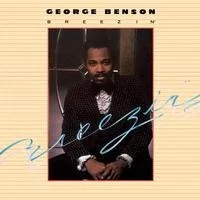
George Benson – Breezin’Acoustic Sounds Series 45 RPM (2026)
There are certain records whose reputation precedes them, but only reveal their full character when heard under the right conditions. Breezin’ is one of those albums. Long admired for its effortless blend of jazz, pop, and R&B, it remains a landmark not just in George Benson’s career, but in the broader crossover landscape of the mid-1970s.
Recorded at Capitol Studios in Hollywood over January 6–8, 1976, and engineered by the legendary Al Schmitt, the album captures a level of polish and musical ease that feels as natural today as it must have upon release. The arrangements, shaped by Claus Ogerman, are central to that identity—strings that do not simply accompany, but breathe, swell, and recede with a distinctly lyrical sense of motion.
What stands out just as strongly, however, is Benson himself. The guitar work here is fully realized—fluid, expressive, and effortless—but equally compelling is the vocal performance. The ease with which he moves between lyrical phrasing and scat singing feels entirely natural, and it would become a defining element of his work in the years that followed. That ability—to excel equally as a guitarist and vocalist—remains one of the album’s most distinctive and enduring qualities.
⸻
The Acoustic Sounds Series 45 RPM
This new 45 RPM edition from the Acoustic Sounds Series—part of the label’s 40th anniversary releases—was mastered by Matthew Lutthans at The Mastering Lab. It presents Breezin’ with warmth and cohesion that feel entirely in keeping with the original recording. Above all, it is a relaxed and immersive presentation.
On “Breezin’,” the opening sets the mood immediately. The strings and flutes seem to flow into the room, warm, lush, and gently enveloping, setting the stage for what follows. The overall presentation favors a sense of ease and continuity, where instruments are not so much precisely placed across the soundstage as they are woven into a cohesive fabric. Everything is clearly heard, yet nothing calls attention to itself, contributing to a quality that draws you into the music. Bass is deep and full here, though somewhat softer in its definition, favoring weight over articulation, which contributes to that overall sense of warmth, even if it does not offer the same level of precision heard elsewhere.
On “This Masquerade,” the piano enters with a natural tonal balance—clear, but never spotlit—while Benson’s vocal is rendered with a gentle ease that allows phrasing and inflection to emerge organically. The transition into scat singing is handled beautifully, with no sense of emphasis or exaggeration. The arrangement unfolds rather than announces itself.
Throughout the record, the string sections are particularly well served. They rise and fall with a smoothness that feels almost tactile, floating across a wide, open soundstage. Percussion is present but understated, contributing to an overall sense of restraint and flow.
Benson’s guitar is presented with a similar sense of restraint. It is beautifully integrated into the overall picture—smooth, balanced, and never pushed forward—but it can at times feel slightly softened in its attack, with less of the edge and definition one might expect. The effect is pleasing, though it leans more toward blend than articulation.
On “Six to Four,” the more upbeat, rhythmic character of the piece highlights the Acoustic Sounds pressing’s strengths. There is a natural sense of flow and continuity to the presentation, even if it does not quite match the last word in resolution. The performance remains relaxed and engaging, with a strong sense of musical momentum.
The 45 RPM format is used thoughtfully here. Both “Breezin’” and “Affirmation” are given their own sides, which lends each performance a greater sense of scale and presence.
There are, however, a few caveats worth noting. Surfaces on this pressing are not as silent as one might expect. At higher listening levels, a degree of groove noise becomes audible in the lead-in and lead-out areas, and faintly in quieter passages. Once the music begins, it recedes into the background, but it is present.
None of this undermines the essential character of the presentation, which remains inviting, cohesive, and musically satisfying.
⸻
The Mobile Fidelity Comparison
For comparison, an early Mobile Fidelity Sound Lab pressing, mastered by Stan Ricker and produced during the label’s formative years, offers a distinctly different perspective.
Pressed on JVC Super Vinyl, the MFSL is immediately quieter. Backgrounds are notably darker, allowing low-level detail to emerge more clearly. From the opening moments, there is a greater sense of separation and articulation—particularly in the upper frequencies.
On “Breezin’,” the string presentation takes on a particularly distinctive character. They enter gently and just as gracefully recede, suspended slightly above the soundstage with a sense of precision and poise. There is a sweetness to their tone, but also a clarity that never turns clinical—striking a balance that feels both refined and natural. That quality carries through the album, where the strings consistently maintain this sense of lift, shape, and control without ever drawing undue attention to themselves.
On “This Masquerade,” the piano carries a touch more edge and clarity, and subtle elements—such as the percussion accents in the right channel—are more apparent. The acoustic piano solo, in particular, comes through with greater definition and harmonic richness, giving it a more immediate, almost tactile presence within the mix.
That contrast becomes more apparent in Benson’s guitar. Here, it carries greater clarity and a more defined leading edge, allowing phrasing and articulation to come through with added precision. Where the Acoustic Sounds edition favors integration, the MFSL presents the instrument with a touch more immediacy and presence.
Bass, while perhaps not as full as on the Acoustic Sounds cut, is more tightly controlled. The result is a sound that feels focused and refined, emphasizing clarity and delineation over warmth and blend.
At times, this added presence can feel a bit insistent, particularly in the percussion, which occasionally steps forward in a way that is less integrated into the whole. Yet it never crosses into harshness, and the overall effect is undeniably engaging.
⸻
Perspective
What becomes clear in extended listening is that these are not competing versions so much as complementary interpretations.
The Acoustic Sounds 45 RPM favors:
• warmth
• integration
• musical flow
The Mobile Fidelity emphasizes:
• clarity
• separation
• low-level detail
Each reveals something meaningful about the recording, and each will likely appeal to different listening priorities.
⸻
Presentation
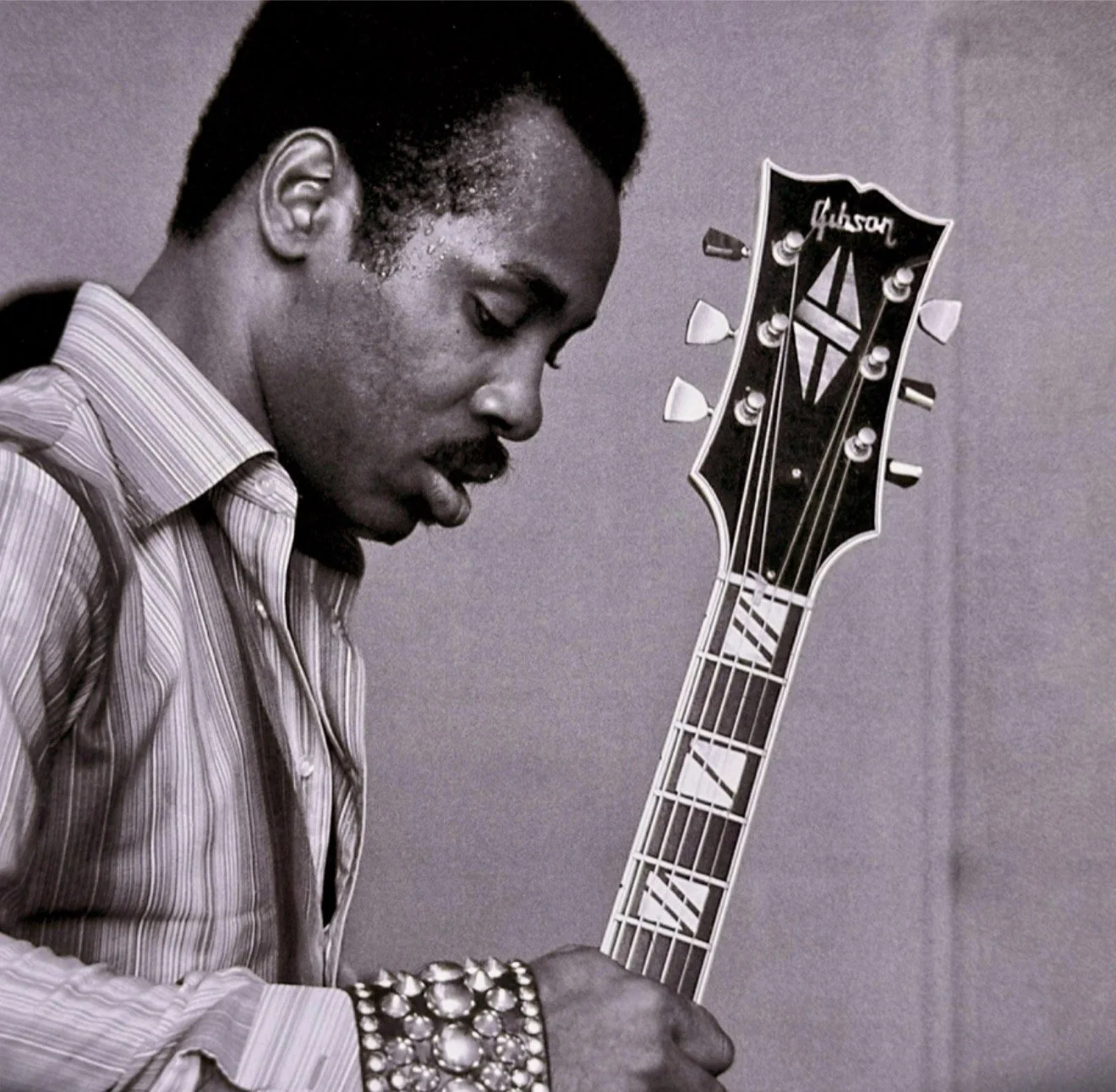
Packaging for the Acoustic Sounds release is excellent. The heavy tip-on gatefold jacket, finished in a matte, anti-scuff texture, is among the best reproductions this album has received. Inside, a pair of striking black-and-white photographs of Benson with his instrument adds to the sense of care in presentation. The use of the period-correct Warner “palm tree” label is a thoughtful touch that further enhances the overall experience.
⸻
Conclusion
It is also worth returning to the contribution of Claus Ogerman, whose string arrangements play a central role in shaping the identity of the album. They are distinctive and immediately recognizable, bringing a sense of elegance and motion that elevates the material throughout. Without them, Breezin’ would be a very different record—still compelling, but lacking much of the atmosphere and character that defines it.
Breezin’ remains a defining achievement—an album that balances sophistication and accessibility with rare ease. Its commercial success, including multiple Grammy Awards and multi-platinum status, only hints at the depth of its musical appeal.
This new Acoustic Sounds Series 45 RPM edition offers a beautifully rendered, deeply musical presentation that many listeners will find immediately engaging. Its strengths lie in its warmth, its sense of flow, and its ability to let the music unfold naturally.
At the same time, the earlier Mobile Fidelity pressing presents a compelling alternative—quieter, more detailed, and arguably more revealing of the recording’s finer textures.
Given the choice, I find myself leaning slightly toward the Mobile Fidelity for its clarity and composure at higher listening levels. But the margin is narrow, and the preference ultimately comes down to what one values most in playback.
In the end, both versions honor the music in their own way—and either provides a rewarding path into one of the defining recordings of its era.

![Ella Fitzgerald - Sings The Rodgers and Hart Song Book—Verve (Acoustic Sounds Series) vinyl reissue [2026]](https://images.squarespace-cdn.com/content/v1/55787f0ae4b02f0501debbeb/1774714651217-TB29YHD81EK60DZ2H5CJ/IMG_0813.jpeg)