The Beach Boys – Pet Sounds Definitive Sound Series One-Step (2026)
With the 60th anniversary of Pet Sounds upon us, and the release of the Definitive Sound Series One-Step edition, I thought this might be the perfect time to revisit this landmark recording.
So much has already been written about Pet Sounds—perhaps more than almost any pop record besides Sgt. Pepper—that there would be little point in attempting to retell its entire history here. Instead, I’d rather talk about my own evolving relationship with the album, because I suspect my experience may resonate with many listeners.
I still remember keeping a small carrying case filled with 45RPM singles as a child, including several Beach Boys records alongside Beatles singles and other pop music from the era. I can still picture the colorful sleeves for songs like “Wouldn’t It Be Nice” and “Sloop John B.” Even then, they sounded somehow different from the Beach Boys records that had come before them—songs centered around surfing, girls, cars, and youthful freedom.
At the time, I couldn’t have articulated why they felt different, but looking back now, I think audiences in 1966 were changing just as rapidly as the music itself. The formula that had carried the Beach Boys through their early success was beginning to wear thin, perhaps even becoming something of a creative trap. Brian Wilson clearly sensed this. Inspired in part by hearing the Beatles’ Rubber Soul, he became determined to create a pop record of equal emotional and artistic depth.
Rather than touring with the rest of the group, Wilson remained in California and immersed himself in composition and production, collaborating closely with lyricist Tony Asher while assembling what would eventually become Pet Sounds. The result was a dramatic departure from what audiences expected from the Beach Boys. The songs were more introspective and vulnerable. Asher’s lyrics helped push the album toward a more reflective and mature direction than anything the Beach Boys had attempted previously. The arrangements were sophisticated, orchestral, and at times deeply melancholic. But the harmonies were still there, and I think they helped carry listeners into this very different kind of Beach Boys record.
And yet, for many listeners—including myself—the album was not an immediate revelation.
I never disliked Pet Sounds. In fact, I always kept a copy in my collection. But for years I found myself asking the same question many people quietly ask when confronted with universally acclaimed works: What exactly am I missing here?
As the years passed, the stature of Pet Sounds only continued to grow. It climbed steadily toward the top of countless “greatest albums of all time” lists, including Rolling Stone’s famous Top 500 rankings. Revered musicians such as Paul McCartney and Eric Clapton spoke openly about its profound influence on their own work, while critics who may initially have been uncertain eventually came to regard it as one of the defining artistic achievements of popular music.
What had once seemed like an unusual and somewhat misunderstood departure for the Beach Boys slowly transformed into a universally acknowledged masterpiece.
So I kept trying.
I never completely gave up on Pet Sounds. Over the years, I continued returning to it through a variety of editions, including original pressings, the celebrated DCC release, and later the Analogue Productions versions.
Pet Sounds was conceived and released as a mono recording, and many listeners—including Brian Wilson himself—still consider mono the definitive presentation. My listening for this review focused primarily on the mono editions, although I also spent time with later stereo versions of the album.
And this time, something finally clicked.
I finally understood the artistic and emotional intent behind the album in a way I never had before. Moments that once seemed elusive or secondary became fascinating, and Pet Sounds finally made complete sense to me—not just song by song, but as an entire musical statement.
Perhaps I simply wasn’t ready for it before, or didn’t yet have the patience to fully enter its world. But this time, listening in a more receptive state of mind, I finally understood why so many people consider it one of the greatest albums ever made.
One of the first things I began to notice was the sophistication of the production. The more closely I listened, the more I began to marvel at how imaginative and meticulously constructed it really is. Brian Wilson draws from the “Wall of Sound” approach pioneered by Phil Spector, yet reshapes it into something more nuanced and harmonically adventurous. The album is filled with unusual instrumentation, layered textures, and unexpected sonic details that gradually emerge over repeated listens.
Although Brian Wilson had already begun incorporating Los Angeles session musicians—many of them associated with the legendary Wrecking Crew—into earlier Beach Boys recordings, Pet Sounds marked the point where those players became central to realizing the album’s intricate arrangements. Wilson’s compositions demanded a level of precision beyond the band’s traditional surf-rock framework, resulting in music of great ambition and depth.
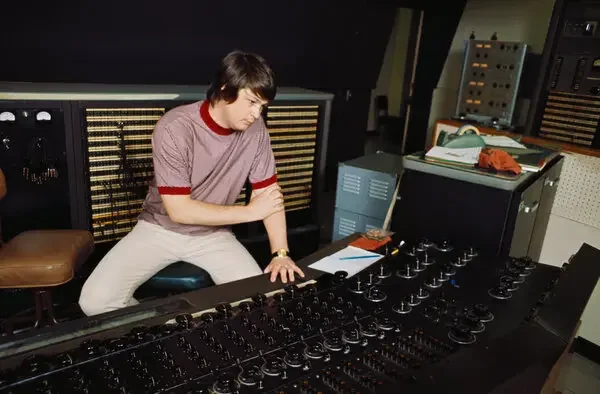
photo credit. NY Times
Listening again to “Wouldn’t It Be Nice,” I still heard the undeniable immediacy of a hit single, but now I also heard something deeper and more dramatic beneath its bright surface. There is a yearning quality running through the song that feels worlds away from the carefree innocence of the group’s earlier material.
“You Still Believe in Me,” which follows, deepens that atmosphere even further. The song has a delicate wind-up music box quality to it, enhanced by the harpsichord-like textures and subtle orchestration drifting beneath the melody. The vocal harmonies feel tender throughout, but what struck me most this time was the song’s fragility.
But the moment that truly unlocked the album for me was “Don’t Talk (Put Your Head on My Shoulder).”
Brian Wilson’s solitary vocal feels intimate, while the orchestration seems to drift weightlessly around it. The organ quietly underpinning the track gives the entire performance an almost suspended, dreamlike feeling. On the surface, it seems deceptively simple, yet the arrangement is extraordinary. This time, it finally revealed itself to me as one of the album’s true masterpieces.
“Sloop John B.” opened up to me in a very different way this time around. As a child, what stayed with me most was its unforgettable singalong refrain — “I wanna go home” — and the immediate accessibility of the song itself. But listening again now, I found myself far more captivated by the sheer inventiveness of the production. The vocal blend is dazzling, the arrangement constantly in motion, and the entire performance carries an exhilarating sense of musical joy and momentum. Like so much of Pet Sounds, it somehow retains the directness of pop music while reaching toward something far more ambitious artistically.
And then, of course, there is “God Only Knows.”
Few songs in popular music are spoken about with as much admiration as “God Only Knows.” Listening to this recording again, I finally understood why so many musicians speak of it with near reverence. The production is filled with subtle harmonic movement and breathtaking vocal harmonies.
One of the most powerful moments comes near the end of the song, when the voices begin overlapping and weaving around one another in waves, creating an effect of almost unbearable beauty.
Lyrically, it remains timeless, but it is the uniquely fragile and human quality of the Beach Boys’ original recording that makes it impossible to surpass, despite the countless cover versions that have followed.
One thing I gradually came to appreciate was the effectiveness of the album’s two instrumental tracks. This is, after all, a Beach Boys record, and you naturally expect the vocal harmonies to dominate every moment. Yet Brian Wilson interrupts the flow of vocal-centered pop songs with two lush orchestral instrumentals, and somehow they feel absolutely essential to the architecture of the record.
The instrumental “Let’s Go Away for Awhile” slowly came into focus as one of the album’s true sonic standouts, filled with warmth, elegance, and subtlety. The arrangement drifts with an almost ethereal grace, revealing just how sophisticated Wilson’s compositional instincts had become during this period.
The title track, “Pet Sounds,” was an unexpected delight for me. Listening closely, I was fascinated by how much it evokes the lush, atmospheric world of exotica. The percussion, layered instrumentation, and spacious production create a cinematic mood unlike anything else in the Beach Boys catalog.
Another major highlight for me is “Caroline, No,” which closes the album on a wistful note. It is, in many ways, an unusual and complicated song, touching on themes of innocence, change, maturity, and loss. In retrospect, it feels like the perfect conclusion to an album so concerned with growing up, vulnerability, and the uneasy transition from youthful idealism into something more complicated and adult.
Repeated listening finally allowed me to appreciate the album not simply as a collection of famous songs, but as a fully realized musical statement. The harmonies are extraordinary, the musicianship consistently superb, the arrangements richly textured, and lyrically the album moves far beyond anything the Beach Boys had attempted previously.
What also changed for me during this revisit was my relationship to some of the album tracks I had previously regarded as secondary material.
For years, my connection to Pet Sounds centered primarily around a handful of defining moments: “God Only Knows,” “Wouldn’t It Be Nice,” “Don’t Talk,” and a few others. Tracks such as “That’s Not Me,” “Here Today,” “I Know There’s an Answer,” “I’m Waiting for the Day,” and “Just Wasn’t Made for These Times” initially seemed more understated.
But with deeper listening, something unexpected happened.
Those songs gradually took on a new importance within the album. What once seemed understated now felt carefully constructed and necessary. I began noticing the shifting harmonies, rhythmic changes, and layered vocals in a way I simply hadn’t before.
By the end, I no longer heard the album as a small group of celebrated songs surrounded by lesser material. I finally heard it as a complete work, with every song contributing something important to the flow of the record.
And it was through that renewed connection with the music itself that I approached this new Definitive Sound Series One-Step edition.
The story behind this particular One-Step release is fascinating in its own right.
In 1972, Pet Sounds reappeared on Brother/Reprise as part of the U.S. two-LP package of Carl and the Passions – “So Tough.” That edition used a newly prepared Artisan tape, which was later reused for a standalone Pet Sounds LP issued in a less familiar brown-bordered variation of the original cover artwork.
Over time, this pressing—commonly referred to simply as the Carl and the Passions version of Pet Sounds—developed an almost mythical reputation among Beach Boys enthusiasts and audiophile collectors alike.
I finally had the opportunity to hear that pressing shortly before spending time with this Definitive Sound Series One-Step, and the connection between the two immediately became apparent.
The concept behind this release was both ambitious and refreshingly straightforward: locate and verify the long-discussed Artisan EQ’d tape, then transfer it directly to the cutting lathe with no additional EQ adjustments. Chris Bellman handled the mastering, but rather than radically reinterpret the sound, the goal was preservation and transparency—allowing the character of that celebrated tape to pass through as faithfully as possible while taking advantage of the One-Step manufacturing process, modern cutting equipment, and the exceptionally quiet VR900 formulation.
Did they succeed?
In my opinion, absolutely.
What this edition captures so beautifully is the tonal richness and inviting presentation that made the original Carl and the Passions pressing so beloved, but now paired with quiet surfaces, improved clarity, and a level of refinement that allows the intricate arrangements and vocal textures to emerge effortlessly.
Whether one attributes that improvement primarily to the One-Step process, the VR900 vinyl compound, or the precision of the mastering chain almost becomes secondary. The important thing is that the album sounds alive, immersive, and involving in a way that fully serves the music.
Of course, there is no single definitive path into Pet Sounds. There are countless pressings and interpretations available, many of them excellent. Analogue Productions alone issued multiple highly regarded mono and stereo editions, including both 33RPM and 45RPM versions. Steve Hoffman’s DCC mastering remains admired by collectors, and original Capitol pressings continue to hold historical and musical value. Even the later stereo remix offers listeners another fascinating perspective on the album.
That, perhaps, is the greatest testament to Pet Sounds: the music transcends format.
Still, what makes this particular One-Step so compelling is its unique lineage. The discovery of a tape whose markings, spacing, timing, and tonal character all strongly suggested a connection to the long-discussed Artisan source gave the Definitive Sound Series team an opportunity not merely to reissue Pet Sounds once again, but to thoughtfully revisit one of the most beloved and distinctive versions of the album ever created.
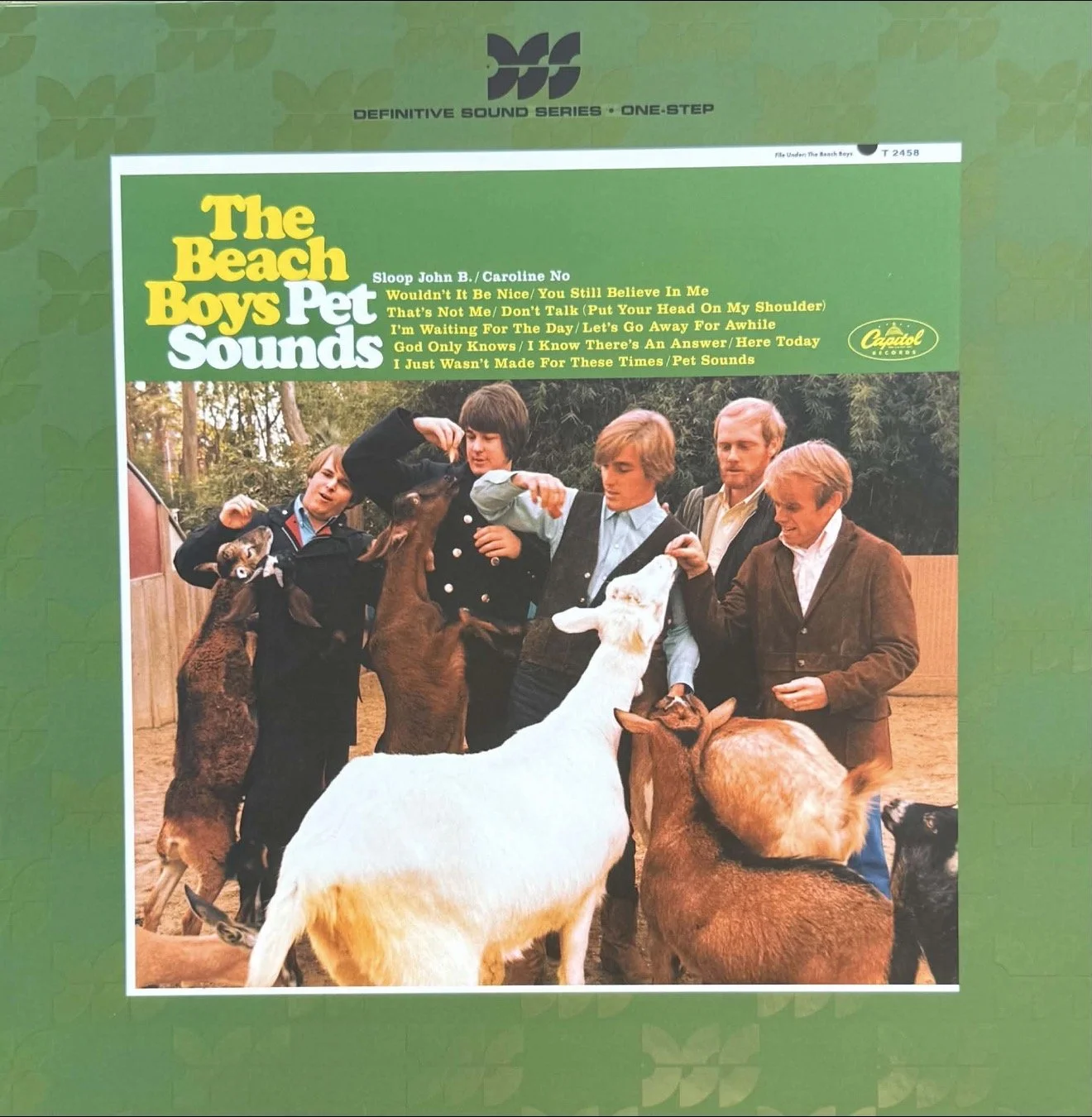
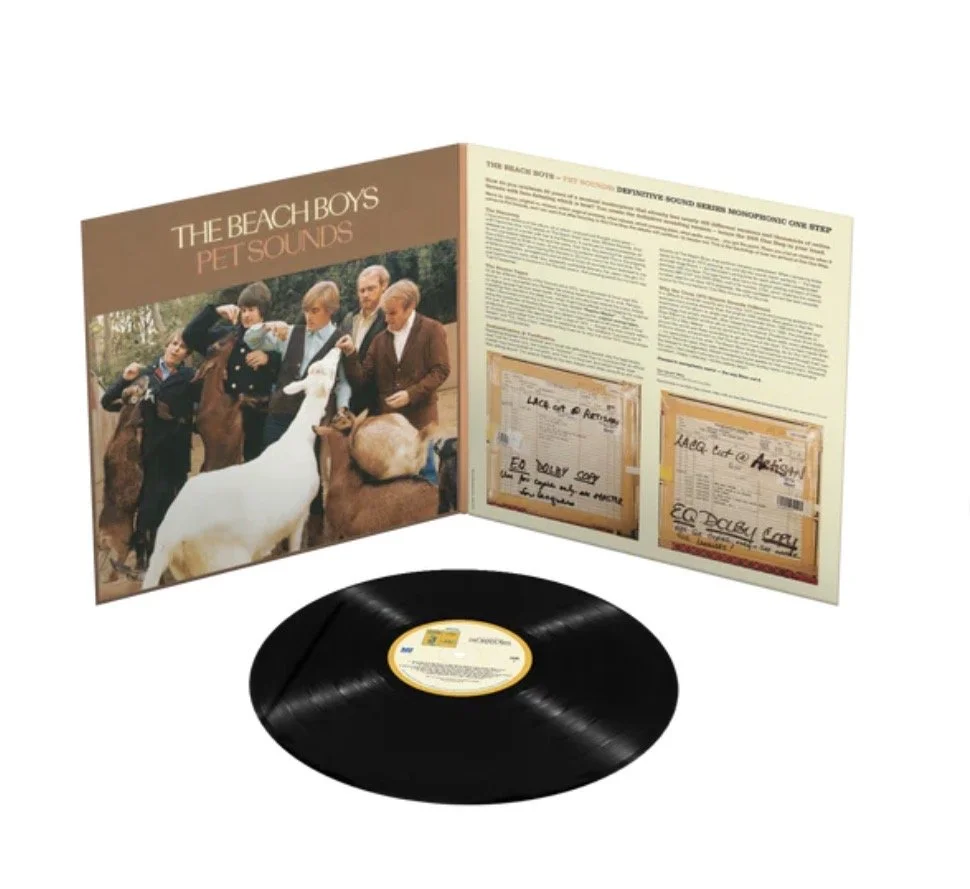
The presentation itself is also beautifully executed. The now-familiar slipcase design of the Definitive Sound Series appears here in a rich dark green, paired with excellent printing and an elegant gatefold presentation that feels appropriately celebratory for an album of this stature. Particularly thoughtful is the decision to reproduce the less familiar brown-bordered Brother Records artwork inside the gatefold while also utilizing period-correct Brother labels, further tying the entire presentation to the specific lineage and history that inspired the project in the first place. The interior also includes photographs of the tape boxes associated with the long-discussed Artisan source, along with an accompanying essay detailing the search for those tapes and the evidence connecting them to the Carl and the Passions version of Pet Sounds. Together, these elements give the release a genuine sense of historical context and archival care.
Some records arrive immediately. Others wait patiently for us to become ready for them.
For me, Pet Sounds was very much the latter.
I’ve experienced this phenomenon with other records over the years—albums that I admired intellectually long before I connected with them emotionally. Pet Sounds ultimately became one of those records for me.
What once sounded merely sophisticated to me now feels exposed, deeply human, and beautiful. Repeated listening over many years finally allowed me to hear beyond the album’s legendary reputation and into the vulnerable core that has moved generations of listeners and musicians alike.
For longtime admirers of Pet Sounds, as well as listeners still discovering its depth and complexity decades later, this release stands as both a technical achievement and a loving tribute to one of popular music’s true masterpieces.
And for that reason, I can recommend it wholeheartedly.