Cantate Domino: Why an Audiophile Classic Still Endures
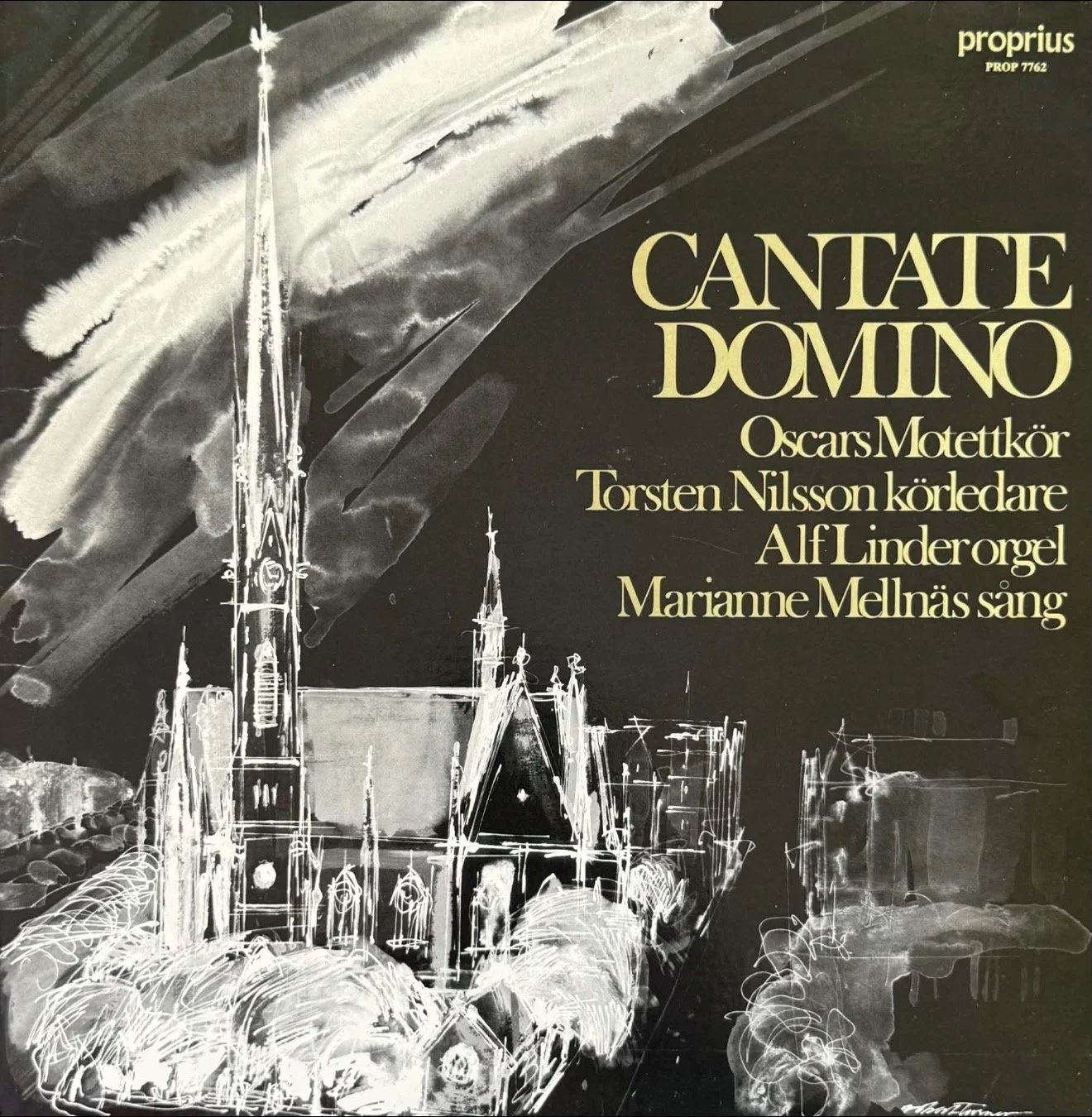
Very few recordings manage to hold the attention of audiophiles for half a century, yet Cantate Domino has done exactly that. A Swedish recording of choir and organ made in a Stockholm church in 1976 may seem an unlikely candidate for such lasting fame, but its reputation has only grown with time. I recently returned to an original Proprius pressing, curious to hear it again with fresh ears—and, more importantly, to ask why this particular record has endured when so many other celebrated audiophile records have not.
Released by the Swedish label Proprius, Cantate Domino features Oscar’s Motet Choir, soprano Marianne Mellnäs, organist Alf Linder, and conductor Torsten Nilsson, recorded in the resonant acoustics of Stockholm’s Oscarskyrkan by engineer Bertil Alving. Its extraordinary sense of space, scale, and dynamic range quickly earned it a reputation as a reference recording, and over the decades it became one of those records audiophiles returned to again and again when they wanted to hear what a system could really do.
That reputation did not fade with the original Proprius pressing. Over the decades, Cantate Domino has been reissued in a variety of forms, from new vinyl editions to digital releases and even reel-to-reel tape, introducing the recording to new generations of listeners. That it continues to be revisited nearly half a century after its release says something about the hold it still has on the audiophile imagination. Which brings me back to the central question: what is it about this particular recording that keeps listeners returning?
What makes Cantate Domino so immediately distinctive is the way it conveys not just the performers, but the space around them. The organ has remarkable scale and authority, the choir opens naturally across the soundstage, and the reverberation of the church seems to linger after the initial sound has faded. More importantly, the performers never seem separate from their surroundings. Everything belongs to the same space, giving the recording an unusually natural sense of a performance unfolding within Oscarskyrkan itself.
Much of that realism can be traced to Bertil Alving’s remarkably simple recording approach. Rather than relying on a large microphone array and shaping the perspective later, Alving used just two Pearl TC-4V microphones in an A-B configuration, feeding a custom-built microphone preamplifier and a modified Revox A77 Mk III tape recorder. The setup was minimal, and that seems to have been the whole idea: preserve the relationship between the performers and the church as directly as possible, and let Oscarskyrkan itself do much of the work.
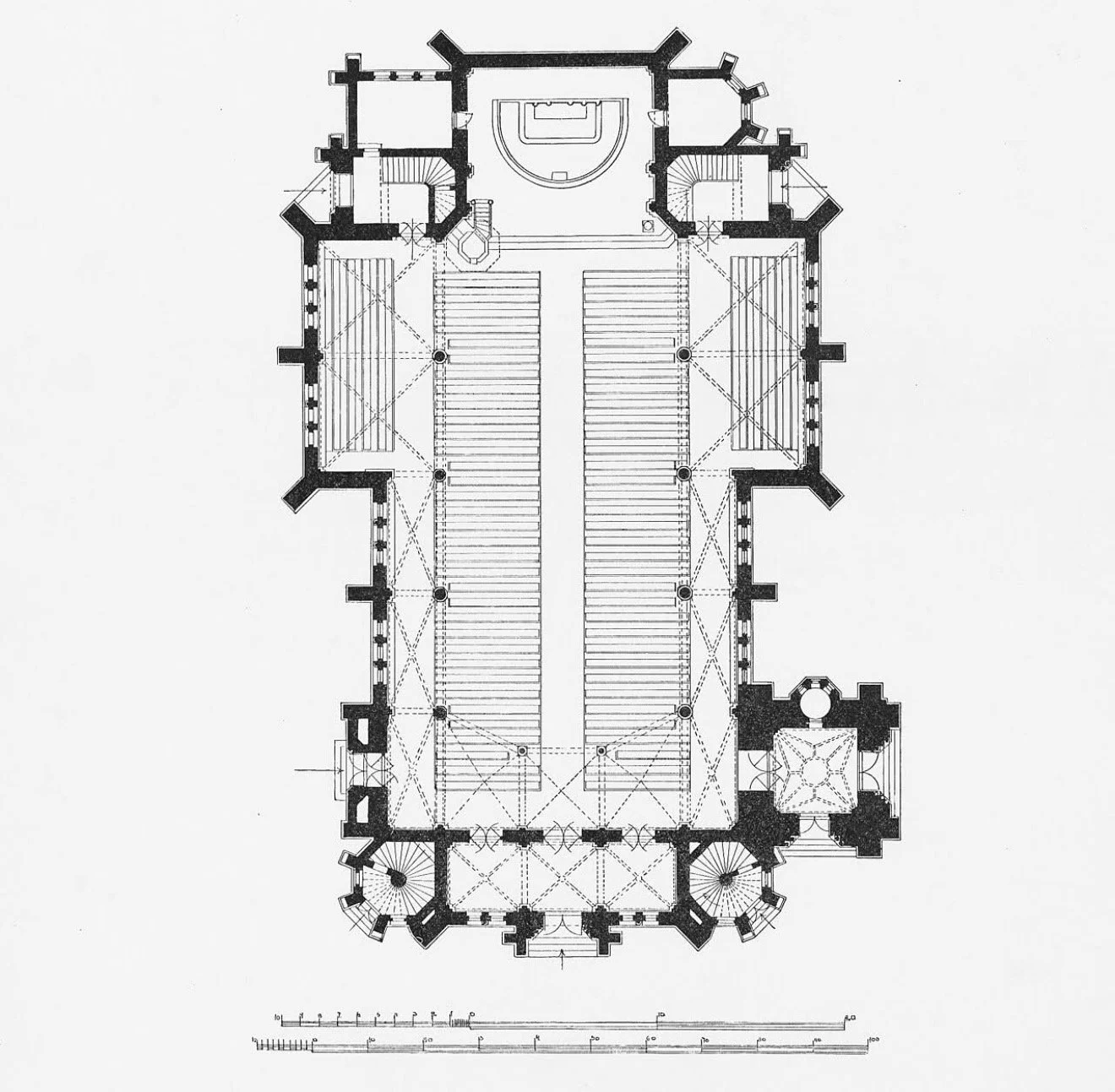
The sessions were held in Oscarskyrkan over several days in January 1976, with three additional selections recorded in April. In researching the recording, I came across a floor plan of the church that surprised me. From the sound of Cantate Domino, I had always imagined a much larger, more cathedral-like space. Seeing its actual proportions changed that picture for me. Yet the architecture clearly creates an extraordinary sense of openness and reverberation. Voices retain their clarity, the organ remains articulate even at full power, and each note seems to bloom naturally into the surrounding space before fading away. The church is not simply the setting for the performance. Its acoustic becomes part of the music itself.
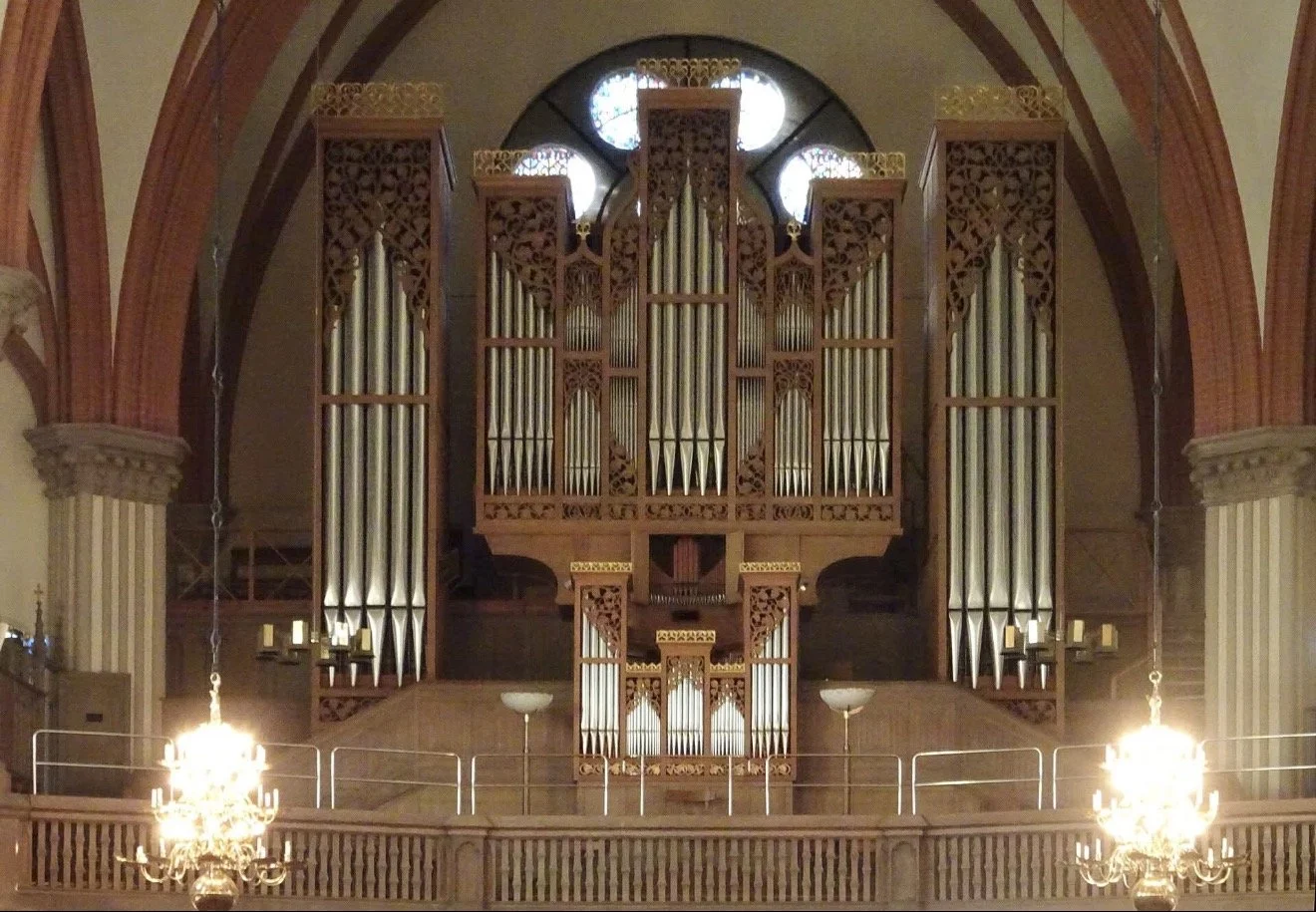
When I finally returned to the original Proprius pressing, it was the opening of “Cantate Domino” that immediately reminded me why this recording acquired such a formidable reputation. The organ is spectacular, not simply because it goes deep or plays loudly. There is a sense of the instrument occupying the church itself—air moving, the room responding, the scale and character of the organ becoming inseparable from the space around it. It is one of the most realistic recordings of the instrument I have ever heard, rivaling my long-standing reference, James Welch’s Magnum Opus on Wilson Audiophile. What struck me most was how naturally the organ sits within the church. It has weight and authority, but it never feels inflated or larger than life.
When the chorus enters, the scale of “Cantate Domino” expands dramatically. The singers seem to form a natural plane across the width of the soundstage, extending beyond the loudspeakers, yet individual voices remain easy to follow within the ensemble. At the same time, you become increasingly aware of the church around them. There is a heavenly quality to the presentation, and when the organ returns beneath the chorus, the sense of space becomes even more convincing. Voices, organ, and surroundings seem to lock together into a single coherent picture.
As the piece builds, organ, chorus, and brass come together at full force. These are the moments that really test the playback system. There are points where the weight and volume seem as though they might become too much, yet somehow the presentation never loses coherence. The organ retains its foundation, the chorus remains open above it, and the brass cuts through without turning harsh or congested. At the climax, the effect is thrilling—not simply because the recording gets louder, but because it manages to preserve scale, clarity, and composure at the very moment when everything is being asked of it.
The second track, Johann Gottfried Walther’s “Concerto for Organ in A Major,” is one of my favorites on the first side. At just over five minutes, it offers a very different kind of pleasure from the opening track. The organ feels perfectly married to the space, with each register sounding beautifully articulated and naturally proportioned. There is a wonderful glow around the instrument, and the piece has a distinctly regal character. It does not rely on the deepest pedal notes for effect. Instead, it reveals just how much beauty and character can come from the organ’s color, texture, and interaction with the church.
“Advent” was a standout for me because it is the first time on the record that we hear the organ and chorus together without the brass. After the solo organ of the Walther concerto, the return of the voices is especially striking, but the character is quite different from the full forces of the opening track. There is a purity to the combination—the weight and color of the organ supporting the chorus, with nothing else competing for space—that makes clear just how naturally the two blend within Oscarskyrkan. It is a quieter kind of demonstration, perhaps, but one of the loveliest moments on the first side.
The next selection, Handel’s “Dotter Sion, fröjda dig,” shifts the focus entirely to the choir. The dynamic range within such a short piece is impressive. The voices can move from real softness and delicacy to something much fuller and more powerful, while individual singers seem to emerge naturally from the ensemble without ever sounding artificially spotlighted. At several points, the long decay of the church becomes especially apparent, the sound lingering after a phrase has ended. By the climax, the effect is both dramatic and beautifully controlled—a reminder that Cantate Domino does not need the organ or brass to create scale and emotional impact.
In “Hosianna, Davids son,” by Georg Joseph Vogler, choir, organ, trumpets, and trombones come together, yet I found myself listening as much to what happened after the notes as to the notes themselves. What stayed with me was the extraordinary decay at the end of the piece. The sound seemed to hang in the air for several seconds before finally disappearing into the space. It is one of those moments that makes Oscarskyrkan feel almost tangible—not simply reverberation around the music, but the sound of the church itself completing the phrase.
The traditional Swedish song “Fröjda dig, du Kristi brud” brings another complete change of scale. Marianne Mellnäs is heard alone, her soprano set slightly back rather than pushed forward toward the listener. There is a wonderful sense of air around the voice, and you can hear it resonating naturally into the church. What impressed me most was the balance between direct and reflected sound. The voice remains clear and present, yet you are always conscious of the space surrounding it. Even at the peaks, everything remains beautifully controlled.
The side closes with “Lullaby,” a Korean folk melody arranged by Malcolm Sargent. After the solo soprano of the previous track, the return of the choir is especially gentle. The voices are softly layered rather than projected forward, creating an almost weightless effect within the church. It is a quiet, controlled ending to the first side, and another example of how Cantate Domino can move from the spectacular to the intimate without losing its sense of space.
The second side opens with “Il est né le divin enfant,” the traditional French Christmas carol arranged by John Rutter. The mood is immediately lighter and more delicate, with the chorus alone carrying the piece. The layering of the voices is especially effective, with clear separation between the male and female sections of the choir. The lower male voices are particularly easy to follow, giving the performance a lovely sense of depth while preserving its gentle Christmas character.
Next comes “Julsång,” Adolphe Adam’s “O Holy Night,” and for me this was the emotional high point of the record. It begins with quiet organ and Marianne Mellnäs singing with an almost bell-like purity, every small dynamic inflection in her voice beautifully preserved. Then the chorus enters, and the entire scale of the performance changes. Just as striking is the depth of the presentation: Mellnäs remains clearly defined in front, while the chorus and the acoustic seem to open out behind her. There is a transparency here that allows you to listen deeply into the recording rather than simply hear the performers arranged across a soundstage. I remember writing in my notes, “Oh my God… this will bring tears to your eyes.” The organ reaches lower as the chorus rises above it, creating an extraordinary sense of drama without ever sounding forced. By the final moments, with Mellnäs soaring above the ensemble before the organ closes the piece, I had completely stopped thinking about sound quality. I was simply overwhelmed by the performance.
The brief Swedish folk song “Den signade dag” follows, with Marianne Mellnäs again heard alone. At just over a minute, it passes almost like an interlude after the emotional intensity of O Holy Night, offering a moment of repose before the choir returns for one of the album’s most familiar selections.
“Stille Nacht” (“Silent Night”) brings the choir back in one of the most beautiful arrangements on the album. The women’s voices begin alone, singing with great delicacy, before the men’s voices enter softly beneath them and gradually take over the second verse. By the third, the two sections begin to weave together, each retaining its own line while becoming part of a larger whole. I was especially struck by how clearly the men’s voices could be heard without ever sounding detached from the ensemble.
Next comes Max Reger’s “Mariae Wiegenlied,” another of the side’s real standouts for me. It begins with deep, beautifully rounded organ tones and a soprano floating above them. The organ is not especially loud, yet the lower notes seem to pressurize the room in a surprisingly physical way, while the voice remains suspended effortlessly above. The contrast between that foundation and the purity of the soprano is gorgeous. In my notes, I simply wrote: “Perfection, perfection!”
Otto Olsson’s “Jul” (“Christmas”) returns the focus entirely to the organ and explores more of its full range than almost any other track on the album. There is activity in the upper registers, through the middle, and down into the lower registers, with the piece moving from very soft, reflective passages to moments that can genuinely pressurize the room. It did not grab me as immediately as some of the other selections, but I found myself appreciating the way it reveals the instrument as a whole—not simply its power, but its color, range, and expressive flexibility.
I especially enjoyed the “Zither Carol,” a Czech folk melody arranged by Malcolm Sargent. The chorus has a wonderfully spacious presentation, with the male and female voices clearly separated yet still part of the same acoustic picture. What impressed me most was the extraordinary control of the ensemble, particularly in the quieter passages. There is an almost eerie quality to those moments, because individual voices become so easy to hear within the choir. It is a beautiful track, and one that shows just how revealing this recording can be even without the weight of the organ.
The album closes with Irving Berlin’s “White Christmas,” which initially struck me as a slightly unexpected choice after so much sacred music and traditional carol material. Hearing the women’s choir suddenly sing in English gives the track a different character, while the organ accompaniment takes on an almost jaunty, improvisatory quality. Yet the performance is so charming, and the voices sound so beautiful, that the piece ultimately feels less like an intrusion than a lighthearted coda to the album’s Christmas theme. It is an unusual ending, perhaps, but a welcome one.
What I came away with after revisiting Cantate Domino was a much greater appreciation for the music-making itself. Its reputation is so dominated by talk of soundstage, dynamics, transparency, and the extraordinary acoustic that it is easy to overlook just how accomplished these performances are. Marianne Mellnäs, Oscar’s Motet Choir, Alf Linder, and the brass players perform with a level of polish and conviction that continually surprised me, while several of the European carols were discoveries in their own right. I went back to the record expecting to be reminded of why audiophiles have treasured it for so long. I did not expect to become so absorbed in the music.
And perhaps that is the answer to the question I started with. Cantate Domino has endured because its sonic qualities are not merely spectacular; they create an unusually convincing illusion of a musical event taking place in a real acoustic space. Lower the lights and close your eyes, and the loudspeakers can seem to disappear along with the walls of the room. For a time, you are simply there, inside Oscarskyrkan, listening. Fifty years later, that remains an astonishing recording achievement. But the reason I suspect people keep coming back is simpler: once the illusion takes hold, you stop thinking about the recording at all.