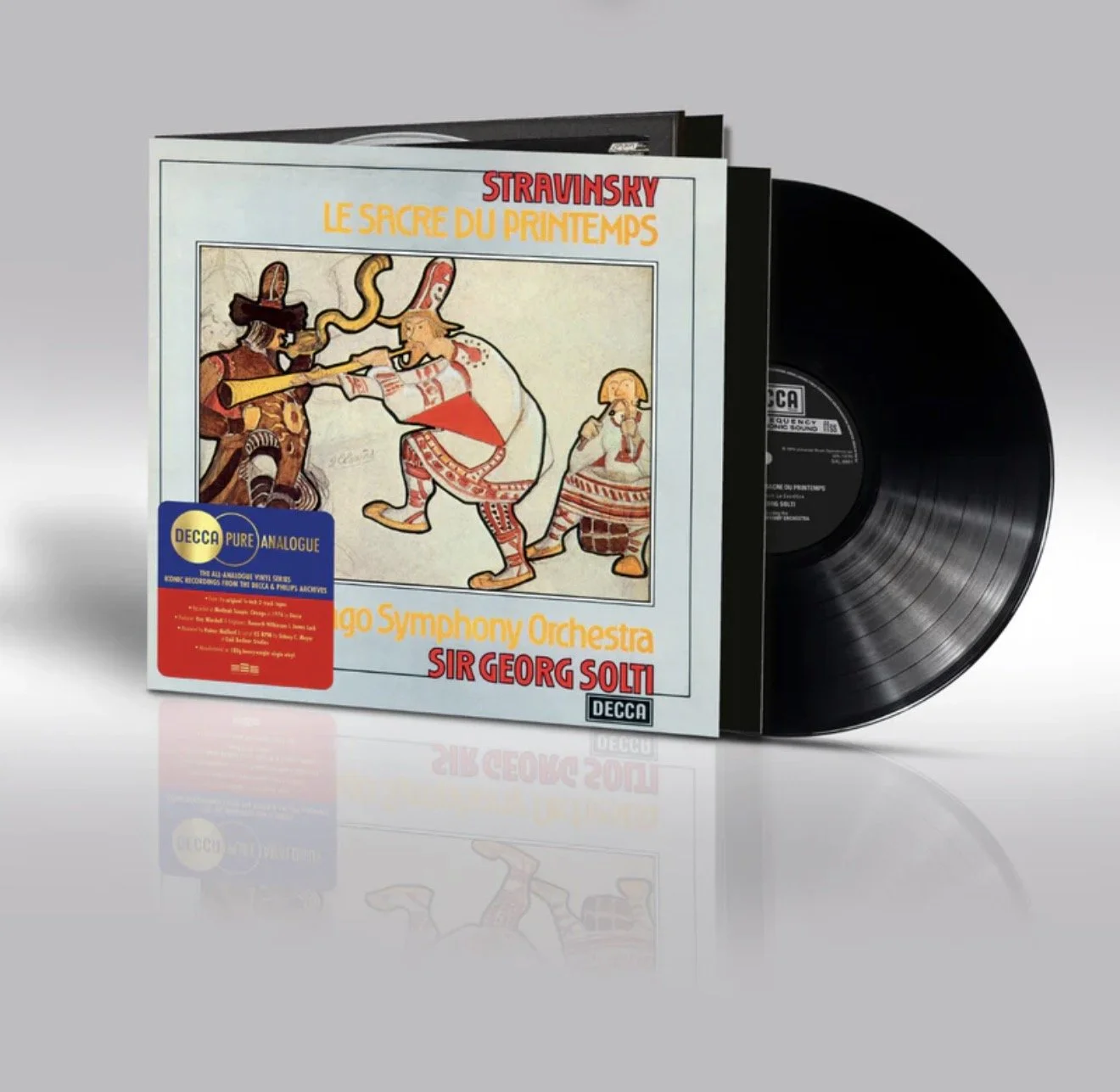
Decca Pure Analogue—Stravinsky: Le Sacre du Printemps/Solti conducting the Chicago Symphony Orchestra—45 RPMvinyl reissue
Since the demise of Original Recordings Group (ORG), Analogphonic and other audiophile classical reissue specialists, and with Speakers Corner no longer releasing classical titles, we are pretty well down to ESOTERIC and DG, The Original Source for new, quality reissues of the great classics. DG remasters DG and Archiv and ESOTERIC vinyl releases are primarily from the Decca catalogue. So it is with some fanfare and ballyhoo that Decca homebase will now remaster titles from its extensive catalogue and also from Philips. The remastering will be completed by the Emil Berliner Studios, like the DG The Original Source titles.
I’m not sure how the Decca execs are choosing their titles—their first three releases would not have been my choice—but it’ll be original analogue tape quality dependent. After 70 years of stereo releases with hundreds specifically from “The Golden Age”, there’s sure to be some tapes rendered unusable by deterioration, etc.
The success of the DG The Original Source releases convinced Universal, home of DG, to lavish the same type of reissue love and engineering on their Decca label (also owned by Universal).
Unlike the DG releases, Emil Berliner would not be remastering Decca and Philips titles from 4 or 8-track masters. Plain old Decca two tracks would have to do. But if they sound like Decca Wideband first pressings, do we care?
As it happens, it turns out the Dutch Philips label did dabble a little in quadraphonic, so some will be mastered from the four tracks, including the new Colin Davis Sibelius Symphony 5 & 7 release from the opening batch (review forthcoming). But most will be mastered in stereo from the original analogue tapes. Interestingly, this first Solti/Decca is cut at 45 rpm for further sonic enhancement. Two sides of the Rite are relatively short. Gammaut Records did this with its new Pepper Adams Quintet album with terrific results.
I was asked by the Decca/Universal PR firm to sign up to do a video release overview of the new Decca Pure Analogue for the @AudiophiliaChannel. This was to be a paid gig plus all the records shipped to the island. I politely declined, not because of anything sinister or nefarious—it was a perfectly appropriate and professional pitch, but I have stopped accepting free records, not because of high-handedness, I simply want to write to my deadlines with no obligations. My Audiophilia colleague and publisher of the YouTube channel The Pressing Matters did take up the offer from UME and has published his excellent video.
I’m interested to hear the Davis Sibelius release to hear if the Berliner team upped the Philips game as they did with DG. So I purchased both Sibelius and Stravinsky. But the one that really caught my eye was the rock ‘em, sock ‘em Chicago/Solti/Decca The Rite of Spring. Known since its original release in 1974 as a high-octane, virtuoso performance with sonics to match (Ken Wilkinson recording them from the Medinah Temple with James Lock), it’s known among Stravinsky cognoscenti as one of the top choices for interpretation, playing and sound. Considering that Emil Berliner made a silk purse of what was a sow’s ear for their DG The Original Source LSO/DG/Abbado Rite, transforming a fairly uninspired performance and recording into a sonic and musical blockbuster, I was really looking forward to comparing it to the new Solti. And also comparing the engineering to the Decca gems that Japan’s ESOTERIC magicians produce (albeit not quite AAA).
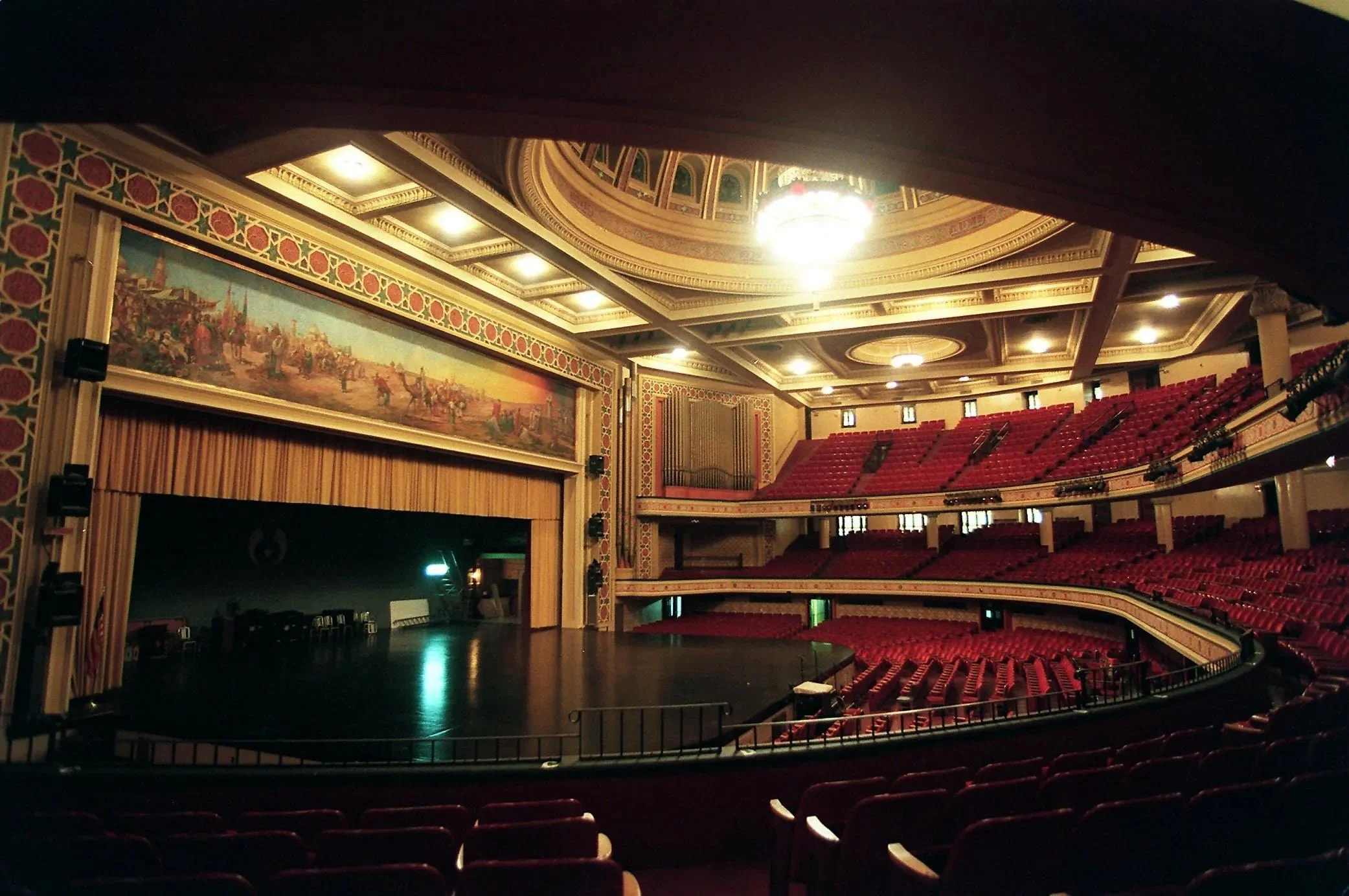
Medinah Temple interior.
I was studying in London when Abbado was recording his Stravinsky cycle. The live shows were amazing, but his panache and the orchestra’s swagger did not, it seem, translate to Fairfield Hall in Croydon, home of the best large hall acoustics in London. The original DG pressings were good, but nothing special—little bloom and subdued dynamics. These qualities hampered the performance. Emil Berliner’s masterful recut changed all that. Dynamism, panache and swagger are all on full display.
Other fine recordings include the Mehta/LA/Decca narrowband (the Wideband pressing/labels had been discontinued by the LA era). It’s a great recording and very musically played. Another recording to hear is the MTT/Boston/DG, easily the finest played but suffering from a truly wacky recorded perspective.
So, to the famous Solti. Already a legendary analogue Decca with a performance to match. Does it supplant Herr. Maillard’s fine work on the Abbado Rite?
Performance
I’d never actually heard this performance before this new pressing. On reputation alone, I almost purchased an original Decca a few times, but for whatever reason, we never got together.
Hey, Stravinsky, violence, power, visceral excitement, Solti and his world beating orchestra, what’s not to love? And you’d be right to expect a lot. And Solti and the Chicago deliver.
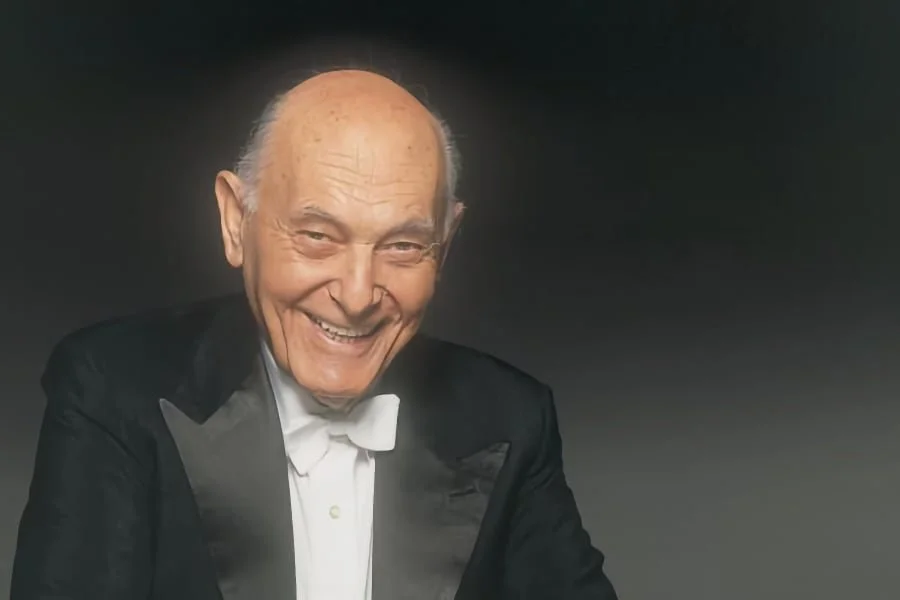
Sir George Solti.
It begins well with the high solo bassoon phrasing beautifully and with Willard Elliot’s gorgeous sound. He matches Martin Gatt’s equally beautiful tone on his Abbado recording. Lots of air and hall around both players.
No matter woodwind, brass, percussion or strings, the corporate whole of the Chicago Symphony is something to behold especially under the iron grip of Solti.
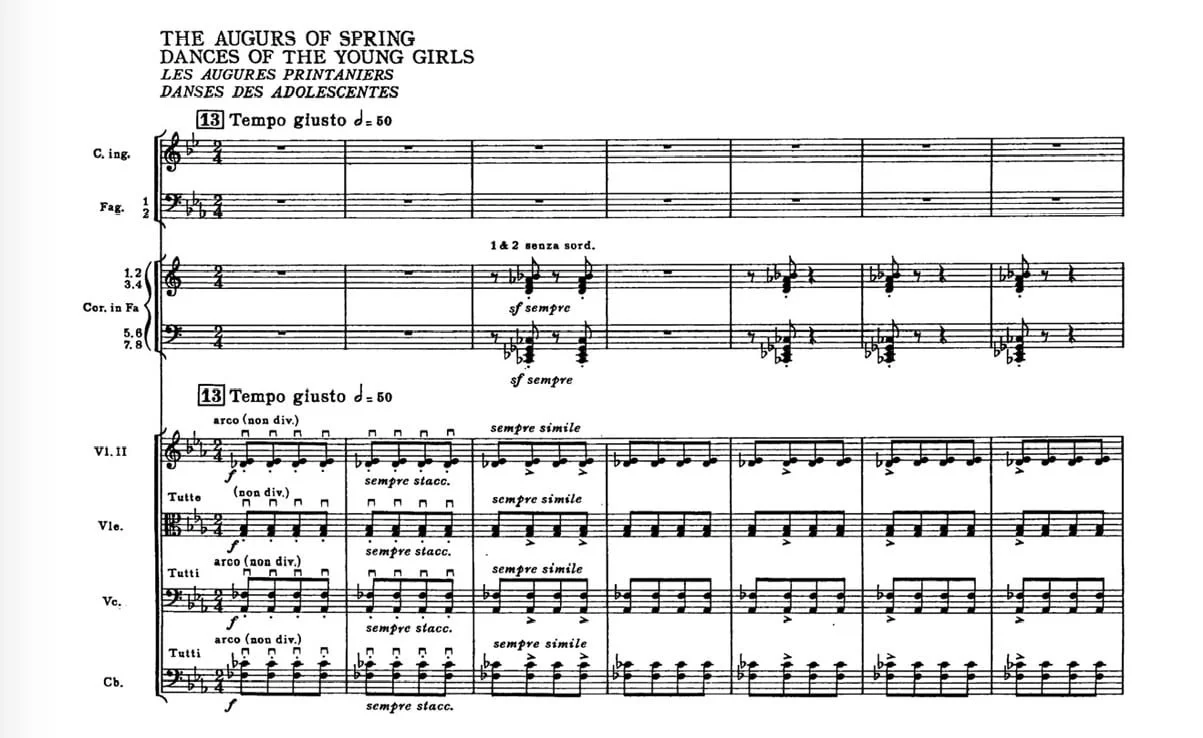
It’s the first half, “Adoration of the Earth”, where many of the pyrotechnical signposts are and Solti plays them for all their worth. The opening gurgling is effective setting up the pounding of “Augurs of Spring”. By the time we get to the virtuoso “Ritual of Abduction” it’s a full on party. I think this is where the riot began in the audience at the ballet’s premier in Paris, 1913. With Nijinsky’s jerky choreography and the raunchy story, the up tight Parisian balletomanes used to Les Sylphides and Giselle had had enough. Monteux’s orchestra must have been disappointed as they had spent 18 rehearsals putting the thing together.
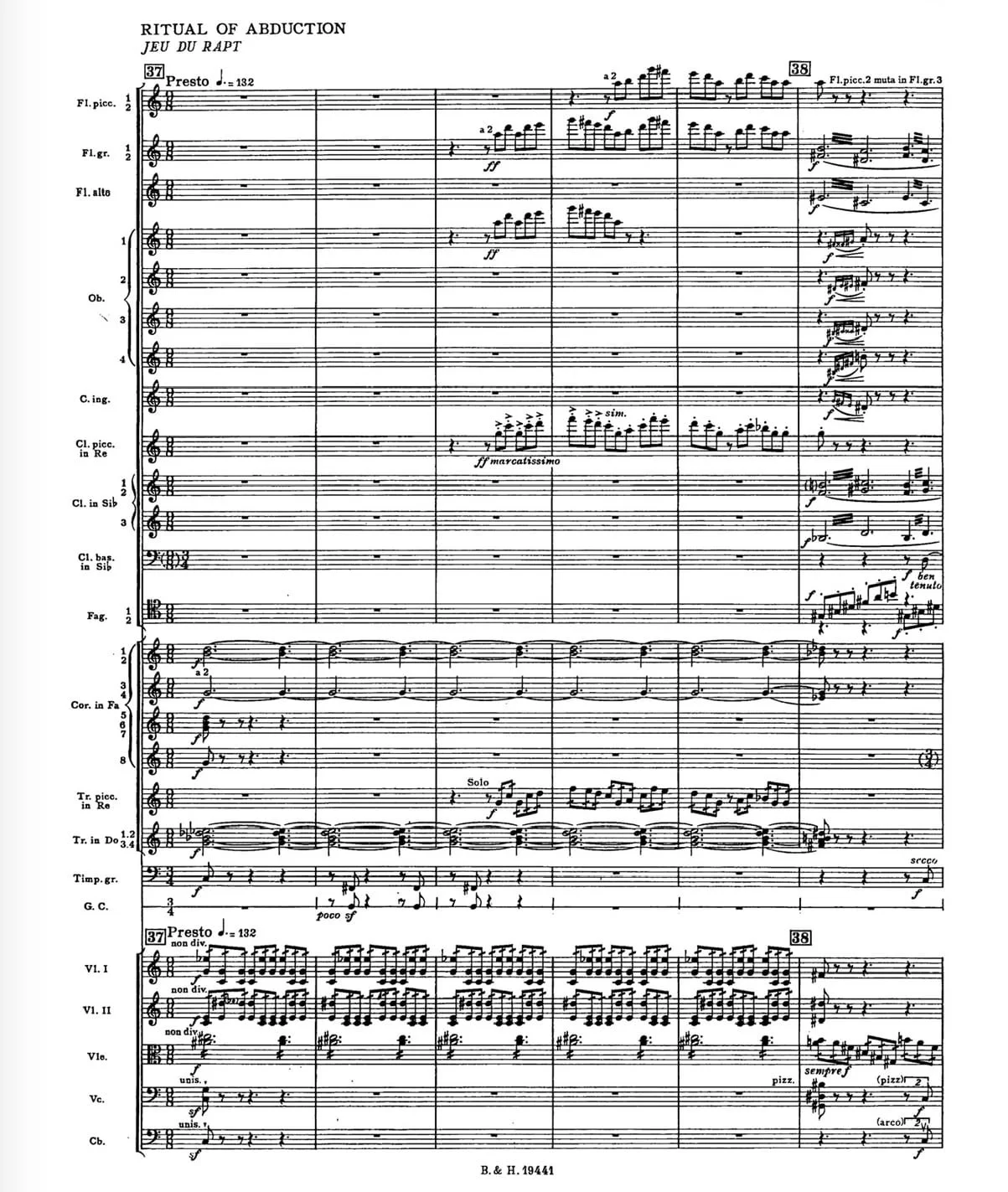
It’s during the frenetic ending of Part 1 (“Dance of the Earth”) where the terror really unfolds—before we get to the relative repose of Part 2, “The Sacrifice”. The orchestra’s clarity and technical brilliance are amazing here.
Quick story: my second time playing The Rite was for a workshop with Dr. Brian Blackwood, a Stravinsky scholar, using the orchestra to play examples during his lecture. Lots of fun but in a very enclosed space with 120 musicians. As we began the incredible “Dance of the Earth”, with requisite bicycle chains for the correct Tam Tam “whooshing” effect, and everybody on their game, the tempo kept getting faster and faster but controlled, and during the final bars with the woodwinds shreaking, I felt myself being levitated out of my seat. A strange feeling that never happened before or since. There was an insane amount of energy in a very small space.
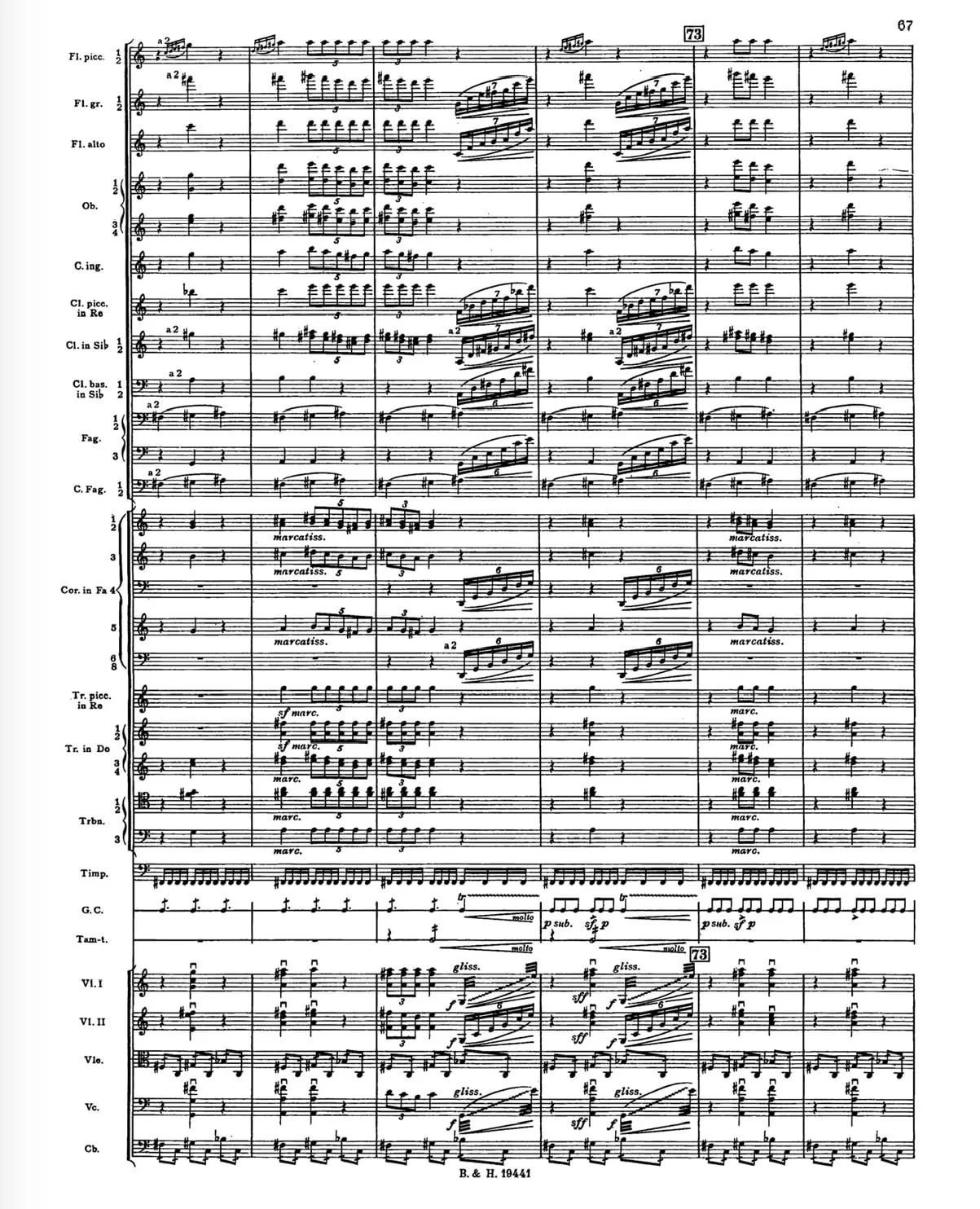
Dance of the Earth. A race to the end.
Both Abbado and Solti pound out that dance for all they’re worth.
The opening of “The Sacrifice” is suitably mysterious, highlighting Stravinsky’s exceptional orchestration. Solti allows every unique line its due. It sounds literally primordial. And then when the percussion pounds out their 11/4 bar quarter notes, we’re off again.
Well over 100 years later, the impact of the piece still packs a wallop, no more than the final “Sacrificial Dance”. Solti’s orchestra handles the challenging time changes with ease, and it brings to an end one of the finest performances on record.
The new pressing
The record was delivered in a beautiful matte gatefold, with all the typical Emil Berliner bells and whistles. The recording notes hint at a quad mix, but it’s ultimately a stereo recording using 12 channels and Neumann M50 mics.
Pressed at Pallas at 180 grams, it was flat and quiet with the black narrowband Decca label. I didn’t forget to switch to 45 rpm before playing.
The mix is interesting. You’ll never hear the strings as clear and focused on a recording, at least I haven’t. All of Stravinsky’s string technique bag of tricks are on show, col legno, flautando, at the heel, harmonics, etc. And they are all bathed in a glorious light. Fantastic.
The eight Chicago horns led by Dale Clevenger allow Solti to dig down to his most violent best—if you’re a TOS Star Trek fan, think Spock freaking out in “Amok Time”. The best Rite horns I’ve heard bar none (with the odd rhythmic ensemble slip in “The Sacrifice”)
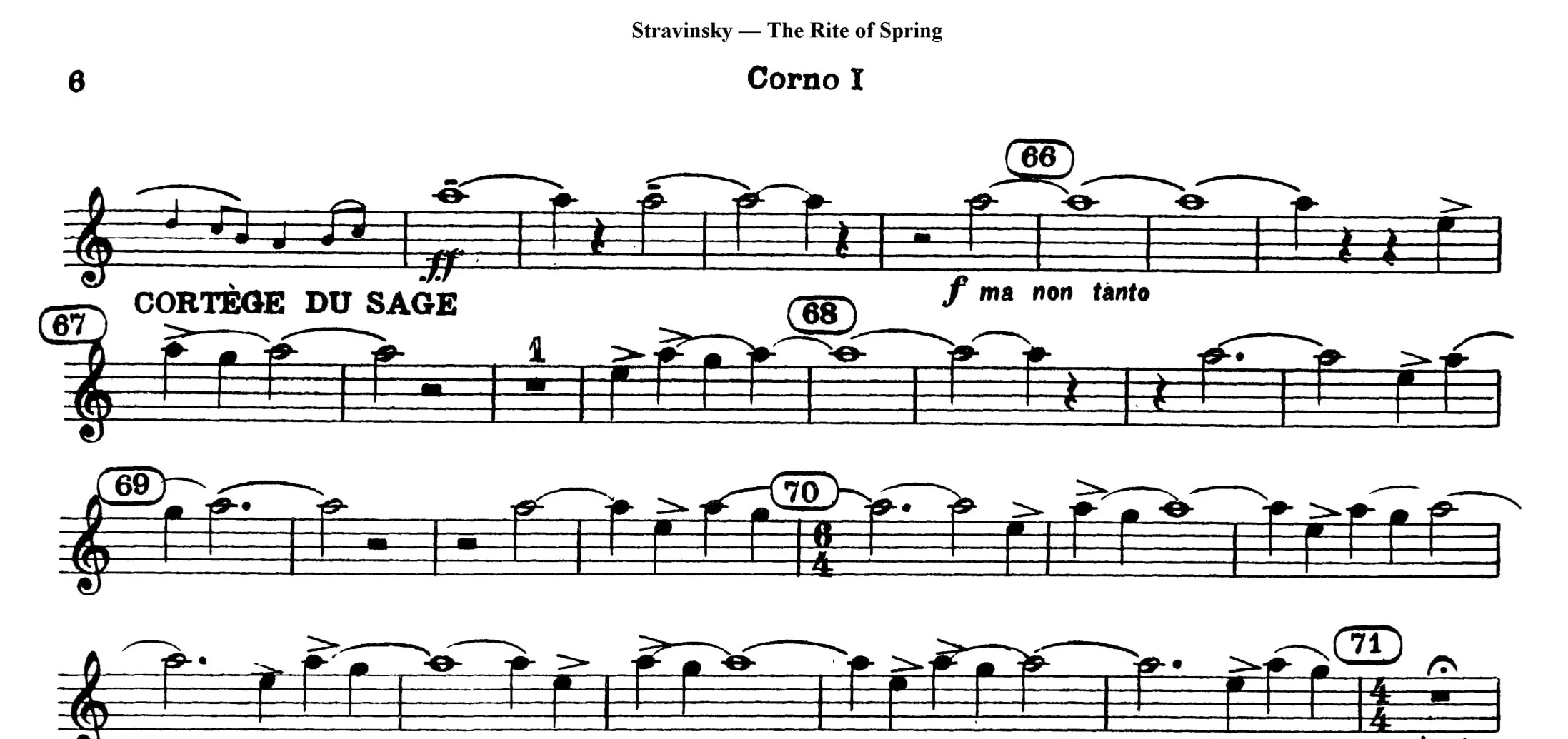
I would have preferred the trumpets (piccolo trumpet, especially) to be further up the food chain, but that’s a very slight niggle on a wonderfully dynamic recording.
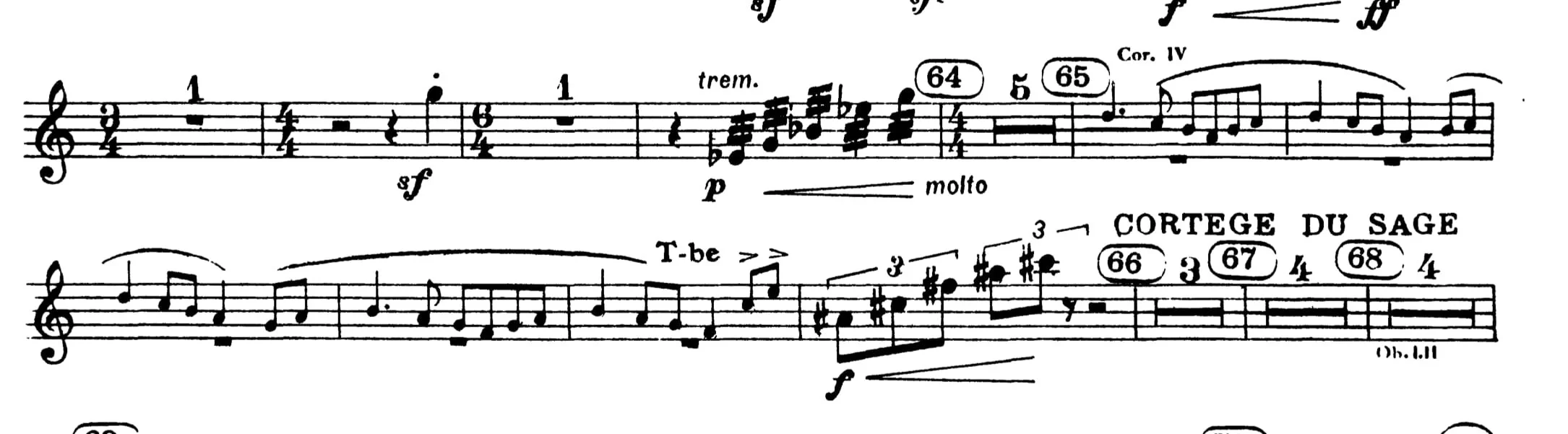
Piccolo trumpet writing at its best.
Civilians, you can purchase this excellent remastering with confidence. You won’t confuse it for a classic Wilky Decca at Kingsway, but it’s very welcome nonetheless.
For the Rite aficionados, you may prefer the Mehta Decca recording, and for players, the BSO under MTT can’t be beaten (but the recording!!!).
Me?
So, if keeping one recording, which would it be? For my taste, Abbado. The remastering is a thing of beauty, and turned an also-ran record into a go-getter. That said, the new remastering runs it a close second, and the Chicago Symphony under Solti is second to none.
Further information: Decca Pure Analogue