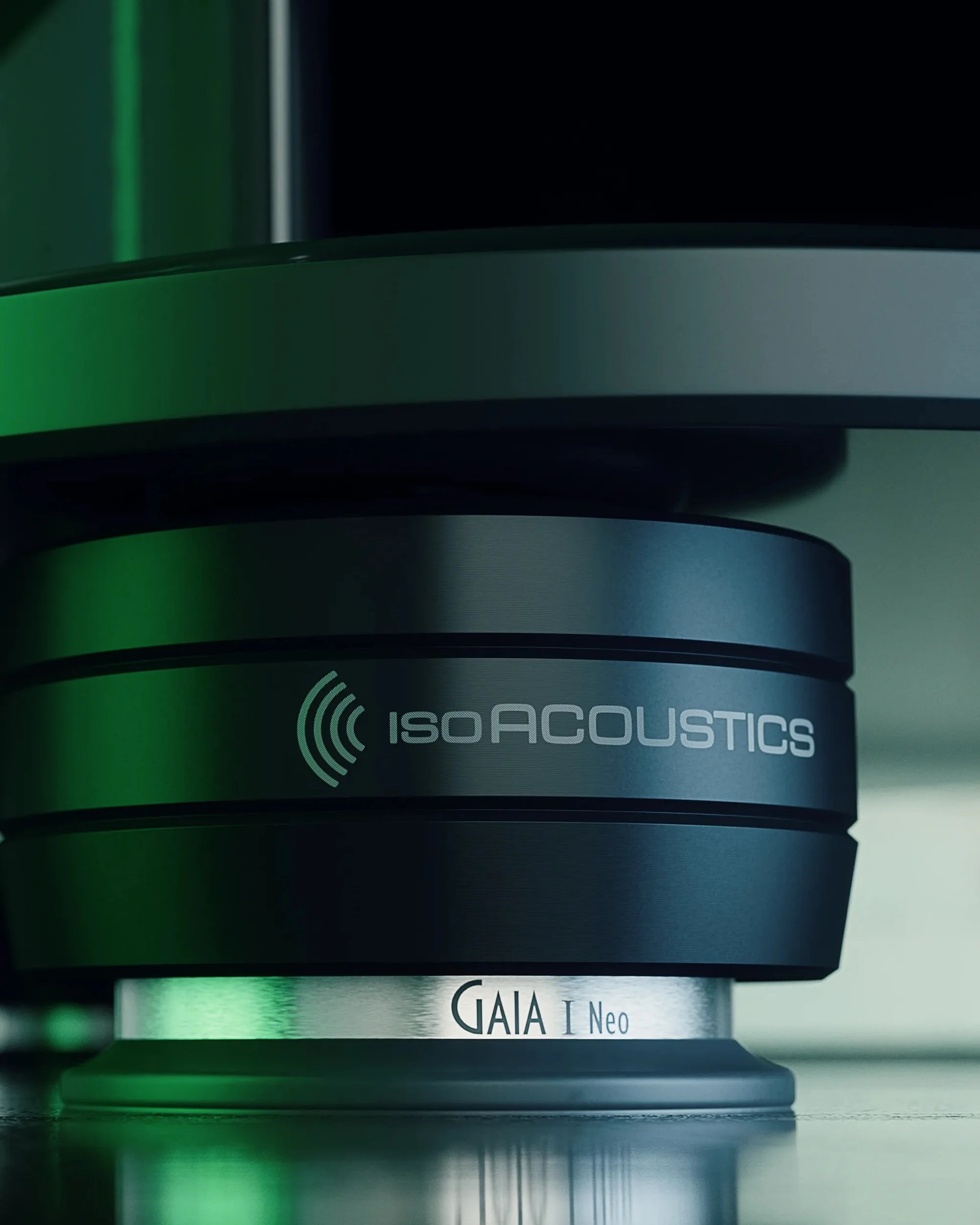
IsoAcoustics GAIA Neo Isolation Feet
Several months ago, I was contacted by IsoAcoustics asking me if I would like to review their new GAIA-Neo series of isolation feet for loudspeakers, a new version of the GAIA. The timing could not have been better: Months earlier, I had upgraded my speakers to the larger/heavier Alta Audio Aphrodite, with their mighty, articulate bass; they come with metal spikes, and the sound quality has been audio heaven. But, as usual with me, I was beginning to get that itch to do some minor tinkering with isolation, cabling, and other 3rd-order matters to see if I could optimize the beautiful sound quality I was enamoured with. So I happily accepted the offer—many thanks to Jaclyn Inglis (PR & Communications) for the arrangements.
Five years ago, I reviewed the original GAIA series of isolation feet:
After that, I was sufficiently impressed that I also began, over the years, using the IsoAcoustics Orea Series of isolation footers for audio devices other than speakers that do not require a threading screw for attachment, such as DACs, preamplifiers, amplifiers, music servers, and turntables. Most such units in my audio system now have either 3 or 4 Orea placed under them for good measure, and I don’t hesitate to acquire more Orea when needed; they are my go-to for dealing with pesky unwanted mechanical vibration/resonance that they are designed to tame (decouple from their resting surface).
Isolation footers work differently from spikes by isolating and absorbing unwanted vibrations versus channelling them to the floor at the fine points of the spike. Isolation also reduces floor and wall vibrations from entering the speakers. In general, what is noticeable (and attractive) to many users when listening to music with such footers is a tightening up of the deep bass and greater clarity and precision of the sound of instruments laid out in the soundstage. In general, in my own experience, the improvements—while subtle—are noticeable and welcome.
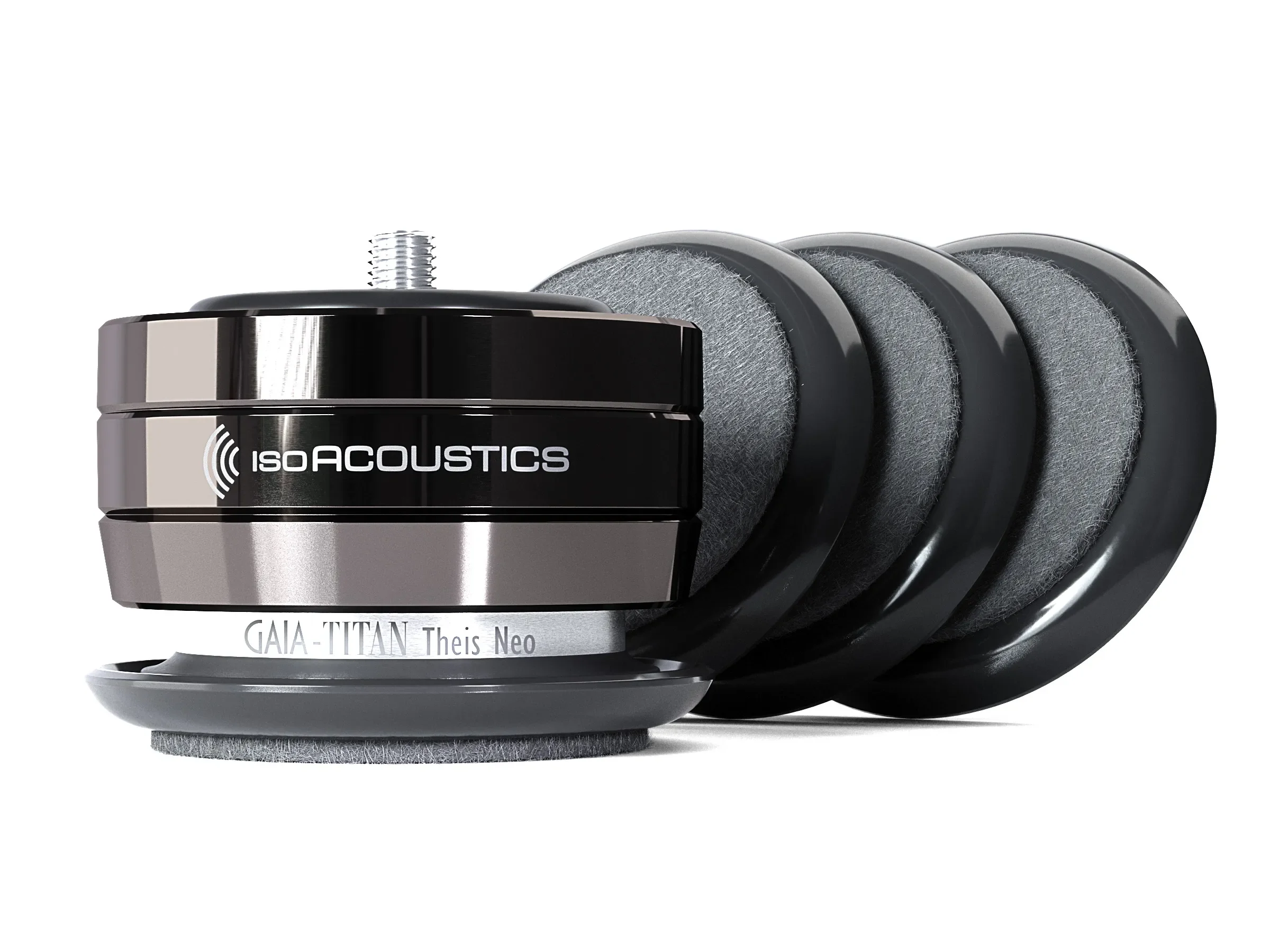
IsoAcoustics has built a strong following over the years, and many high-end speaker companies partner with them, so that their speakers often come equipped with IsoAcoustics isolation products. In some cases, these products are even custom-made for their partner. Companies include Sonus faber, Marten Audio, Gershman Acoustics, Perlisten Audio, among many others.
Other companies make isolation footers using different designs/methods for isolation, such as Stillpoints Ultra series and Symposium Acoustics Rollerblocks series (in which each rollerblock uses a large metal ball bearing sitting on its top; your DAC or other component then sits on the bearings (3 or 4 Rollerblocks)). One of the most interesting variation of isolation footers I have come across is on Infigo Audio’s IS-1 (Cryogen Model) music server/streamer (it is my reference): Attached to the sides, as part of the chassis, are four metal footers, which are disks that you sit the attached upper part to the bottom part with 3 small ball bearings between. Instead of standard stainless steel bearings, however, the Cryogen model comes with ball bearings made of genuine blue sapphire gems, because of their high density for absorption of resonance.
What are the new ones?
The new ones, as in the original GAIA series, offer 3 models (I, II, III) in the GAIA Neo series differing between the 3 in the maximum weight they can support (using 4 footers on each speaker) and price: Neo I (100 kg (220 lbs) $739.99 US for a set of 4), Neo II (55 kg (120 lbs) $439.99 US for a set of 4)), Neo III (32 kg (70 lbs) $299.99 US for a set of 4)).
(You need 8; 4 for each speaker.)
The regular GAIA series prices are lower: GAIA I (USD 495.89 for a set of 4), GAIA II ($299.99 US for a set of 4), GAIA III ($229.99 US for a set of 4).
For even larger weights, there is the new GAIA-TITAN Neo series following suit (versus the original GAIA-TITAN series): Theis Neo (145 kg (320 lbs)), Rhea Neo (190 kg (420 lbs)), Cronos Neo (281 kg (620 lbs)).
For the Aphrodite, which weigh 137 lbs each, I was sent eight GAIA Neo I. (My previous speakers weighed less; I had used the GAIA II and III.) Since I keep a rug under my speakers, I also opted for the metal carpet disks with small spikes on the bottom; you can place them under the Neo for a firmer connection to the rug. (I used the Neo I to replace the 4 metal spikes that came with each Aphrodite.)
What is the difference between the original GAIA and the new GAIA Neo?
They differ in looks, engineering, and price. The Neo is larger than the older version (Neo I is 3” x 2.52” versus 2.5” x 1.9”, for example) and features some additional enhancements. Colors available are Dark Chrome and Black, as before; I was sent the Dark Chrome, which adds a classy/elegant look to my high-gloss black Aphrodite. Installation is now much simpler than it used to be: one no longer needs to use a tool to tighten the Neo footer or adjust its height, as was necessary for the older GAIA version. Simply attach an appropriate-sized thread to the bottom of the speaker and twist the Neo onto it (making sure when done that the IsoAcoustics logo is facing front to ensure proper alignment with the speaker's drivers). It tightens securely. Several standard-sized threads are included, and otherwise, IsoAcoustics will supply you with what you need. (My Aphrodite uses M6; IsoAcoustics sent them to me.) You can also adjust the height of a Neo up to 8.5 mm without affecting its on-axis alignment by rotating the lower-level ring, making it very convenient. That allows a more precise, even leveling of the speaker, or allows (on purpose) a minor tilt of the speaker, backward or forward.
I found it much easier to install the new GAIA Neo than the older GAIA: I had one of my family members tilt the speakers back so I could install the front two, then tilt them forward for the other two. It only took about 5 minutes. IsoAcoustics also includes “foot sliders”, which you can place under each of the four feet to allow quick sliding movement of the speakers over your floor/rug. (A quick second tilting allowed them to be slipped on/off easily.) This is important for easy experimental adjustment for the optimal location/position of speakers in your space.
I had already optimized the speakers' positioning over time; that is a second-order matter, after the choice of speakers, which is of the first order; I did not need to use the sliders.
More generally, from the IsoAcoustics website, the differences are stated as:
“The GAIA Neo series builds on IsoAcoustics’ patented isolation technology with refinements that take performance even further. The GAIA Neo isolators offer increased isolation effectiveness, reducing internal reflections and mechanical vibrations with greater precision. The GAIA Neo isolator is directional and designed to be aligned with the speaker’s drivers, helping to resist lateral movement and oscillations while maintaining accurate alignment with the listening position. By decoupling the speaker from its supporting surface, GAIA Neo reveals greater clarity, finer detail, and a more transparent soundstage with enhanced depth and realism.”
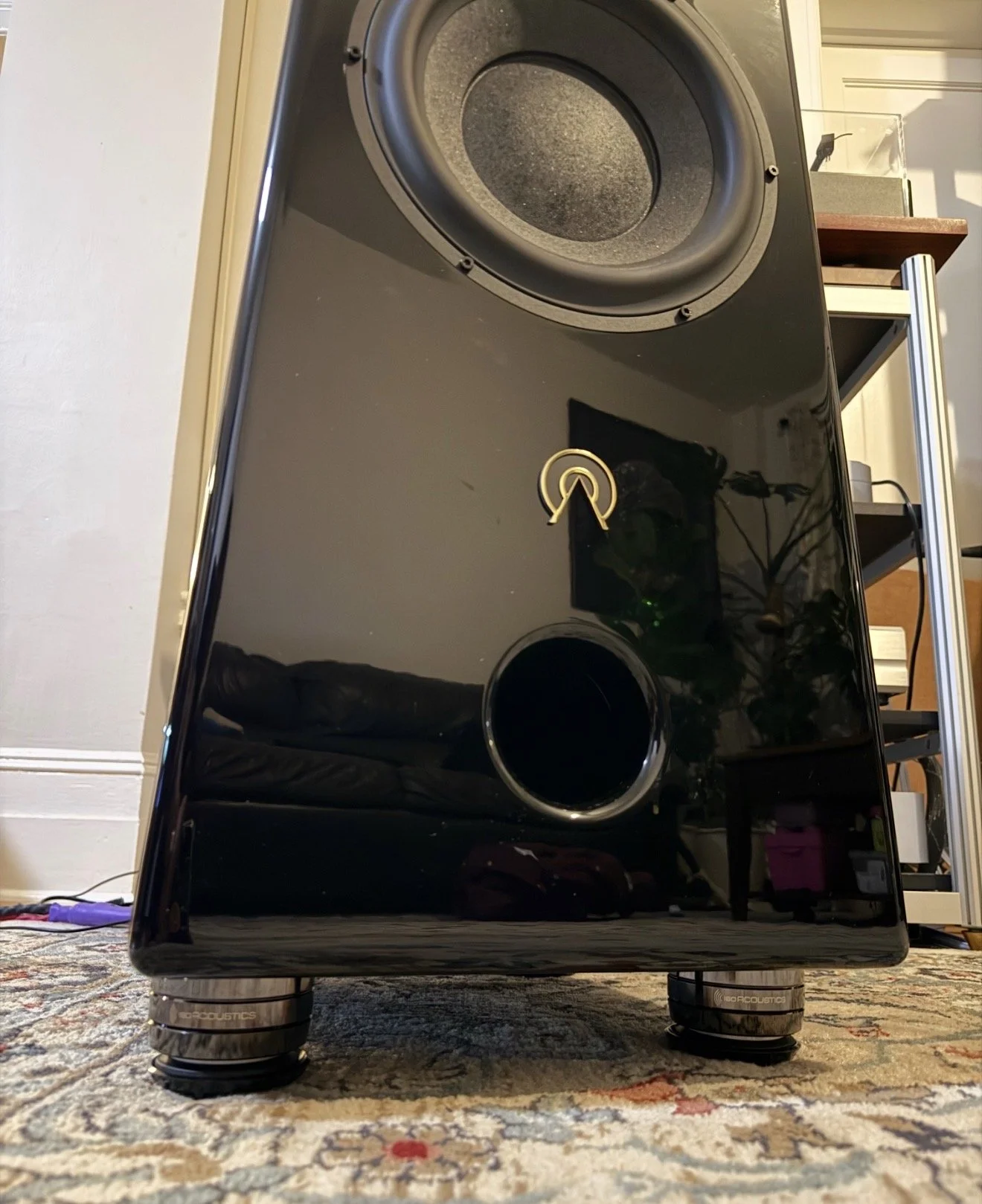
How did the Aphrodite sound with the GAIA Neo I?
The Alta Audio Aphrodite speakers already exhibit exceptionally powerful, controlled bass and cast a huge soundstage; they sound amazing with the spikes they came with. But the Neo lent a new helping hand: In general, using the Neo, several favourable things became noticeable: the bass tightened up even more, the imaging was better, the character of vocals and individual acoustic instruments was cleaner and revealed more details; overall, a more natural sound was evident. In short, A small but delightful increase in sound quality was exhibited; an excellent 3rd-order improvement was achieved.
Summary
The new GAIA Neo series is a worthwhile addition to IsoAcoustics' already successful regular GAIA series. Although more expensive, they are considerably easier to use because they are tool-free for attaching or adjusting their height. They retain an elegant and classy look and even refine it. I’m done tinkering. Highly recommended.
Further information: ISOAcoustics
![Decca Pure Analogue— Sibelius: Symphonies 5 & 7; Tapiola/Colin Davis conducting the Boston Symphony Orchestra [2026/2 LPs/33 rpm]](https://images.squarespace-cdn.com/content/v1/55787f0ae4b02f0501debbeb/1769726727925-91VBFUZ9276PVWZBNO5Y/IMG_0505.jpeg)