![Decca Pure Analogue— Sibelius: Symphonies 5 & 7; Tapiola/Colin Davis conducting the Boston Symphony Orchestra [2026/2 LPs/33 rpm]](https://images.squarespace-cdn.com/content/v1/55787f0ae4b02f0501debbeb/1769726727925-91VBFUZ9276PVWZBNO5Y/IMG_0505.jpeg)
Decca Pure Analogue— Sibelius: Symphonies 5 & 7; Tapiola/Colin Davis conducting the Boston Symphony Orchestra [2026/2 LPs/33 rpm]
These two great symphonies by Finland’s Jean Sibelius (1865–1957) are taken from the famous box set of his seven symphonies conducted by English conductor Colin Davis and played by the Boston Symphony Orchestra.
The Sibelius symphony recordings were released individually on Philips LPs in the 1970s, with the first released, the subject of this review, appearing in 1977.
All were recorded in Symphony Hall, Boston. As usual with original Philips releases, recording information is spotty—the record was produced by Vittorio Negri, but even ChatGPT could not unearth the original engineer(s).
This release was mixed and mastered from the original Philips Quadraphonic tapes by the team at the Emil Berliner Studios, the same team of magicians mastering and cutting others in the new Decca Pure Analogue series and DG, The Original Source series.
The deluxe, matte gatefold, with the glorious Edvard Munch artwork on the cover, came with all the Emil Berliner paperwork, with flat and silent vinyl pressed at Pallas.
The original album was never released as a Quad LP, but mastering engineer Rainer Maillard has become an expert in using the extra channels, if available, to add hall ambiance to the standard two-channel stereo mix.
From the notes:
For this release, Rainer Maillard at Emil Berliner Studios has used the original, edited four-track quadraphonic master tape to make a new stereo mix sent directly to the cutter head. This preserves a pure analogue path throughout. The Philips engineers of the 1970s would similarly have mixed the four front and rear channels before cutting, but this downmix would have resulted in a two-track stereo copy for mastering, whereas here the lacquer is cut directly from a ‘live’ mix into stereo from the four Quad channels. Sonic results have been further enhanced by distributing the recording across three sides instead of the original double-sided LP. This has also enabled us to include Davis’ December 1975 recording of Sibelius’ last major orchestral work, Tapiola, on the fourth side.
Jean Sibelius (1865–1957)
Side A: Symphony No. 5 in E-flat, Op. 82 – I. Tempo molto moderato – Largamente – Allegro moderato
Side B: Symphony No. 5 (cont.) – II. Andante mosso, quasi allegretto / III. Allegro molto
Side C: Symphony No. 7 in C, Op. 105
Side D: Tapiola, Op. 112
I did not hear the originals of this reissue, but I do have a copy of the original Symphony No. 1. The raves for each instalment of the symphonies were read far and wide.

Sir Colin Davis
Sir Colin Davis (1927 – 2013) was a noted Mozartian and Berlioz specialist in the ‘60s and ‘70s, so it was yet another feather in his illustrious cap that he produced such a brilliant set of Sibelius symphonies. But not surprising to many of us who knew his superb taste and musical knowledge. It’s no wonder that after his 15-year term as Music Director at the Royal Opera House, Covent Garden, he was courted by many of the world’s great orchestras (he turned down Boston music directorship at the same time he took on Covent Garden). After the Royal Opera, he held a few lengthy tenures, including with the Bavarian Radio Symphony and the LSO. But he was in great demand as a courtly and pleasant guest conductor with long-term relationships with Dresden, the Concertgebouw and in Boston.
He came into the conducting business the hard way—via the clarinet (he was turned down for the Royal College of Music’s conductor course due to his lack piano proficiency), spent his time playing clarinet on a horse during his National Service (Life Guards Band), then spent many years freelance conducting around BBC orchestras (three failed auditions at the BBC Scottish Symphony before getting the job), eventually landing the directorship of the BBC Symphony Orchestra.
He could certainly be tough in rehearsal, but he was adored by many orchestral musicians for his musicianship, patience and lack of ego. And during his time with the Philips label, he made many fine recordings of the music of Sir Michael Tippett (also on ARGO), fantastic Haydn with the Concertgebouw and the aforementioned Mozart and Berlioz. And then we come to what many people consider the ultimate box set of Sibelius symphonies.
Performances
The BSO produce a very refined and cultured sound, perfect for Davis’ unfussy, maybe even typically Finnish, Sibelius—cool, calm and collected with no artifice. There are similarities to Maazel’s equally famous box set on Decca with the Vienna Phil, but is quite spare compared to some of the Karajan Berlin Phil lushness (4, 5 and 7). Poor old Anthony Collins’ mono Decca LSO box from the 1950s is an also-ran.
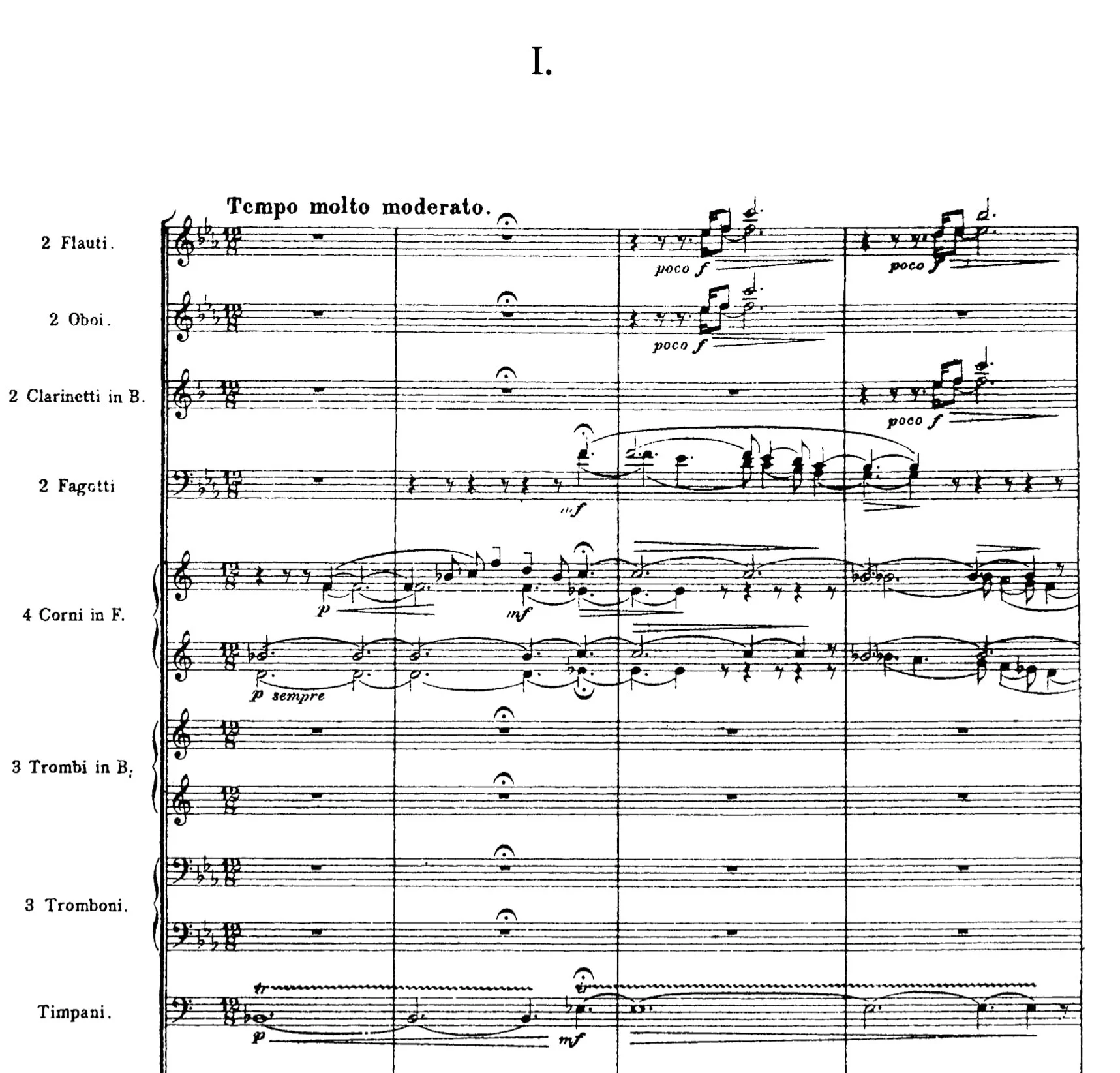
Charles Kavaloski, principal horn, begins the symphony with a glorious horn call rising outof the mist.
Sibelius, for all his mighty genius, was a bit of an odd duck. He wasn’t really the same after practicing the violin for years to get into the Vienna Philharmonic. He failed his audition at 18 years old and went into a severe melancholy. Heavy drinking was a result, and he suffered from severe alcoholism his entire life. His long-suffering wife supported him, but it was a struggle for her.
During less frenetic times, he composed freely and with great genius, but drinking and health issues led to long bouts of compositional silence in later life.
Luckily for us, he composed seven magnificent symphonies, fascinating tone poems and his magnificent and hugely popular Concerto for Violin.
The Symphony No. 5 in E-flat, Op. 82 (begun in 1914, reaching its final, much revised form in 1919). It’s a unique symphony chock-a-block with fantastic Sibelius orchestration, pedal points, heavy use of syncopation, gorgeous harmony and melodies, including the famous “Swan Theme” in the final movement. A masterpiece. Certainly my favourite Sibelius work.

Magnificent horns playing the “Swan Theme’.
The Symphony No. 7 in C, Op. 105 is also much loved. More introspective than the 5th, it is in one movement and much shorter, coming in around 22 minutes. It’s also a masterpiece born of a simple opening syncopated C Major scale, then building steadily over three or four climaxes, supporting a very noble trombone solo at each climax.
Both symphonies are fiendish to conduct—to build Sibelius’ climaxes, to control the tension and release, and to manage the rhythm and very complex harmonic progressions. Sir Colin Davis manages all these tasks with ease—he has such a beautiful, elastic beat; I can imagine how such a responsive orchestra enjoyed his direction.
The symphonies, including the added tone poem Tapiola, Op. 112 (1826), receive world-class performances. They’re famous for a reason and will not disappoint in any way. Ensemble is superb, and each solo is taken with the expertise and beauty you’d expect from this band.
The Pressing
The very beautiful package and pride of ownership will help allay concerns over the cost (CAD 90 to my door) of the double 33 rpm LP (3000 copies). I was most interested in how Emil Berliner improved the somewhat sedate, smooth Philips house sound. My original copy of Symphony No. 1 has all the hallmarks of Philips—silent surface, good, not huge dynamic range and mid hall perspective. I had not heard the 5th and 7th originals. Also, to hear if the mastering had solved some of the problems the same engineers encountered from Symphony Hall in the DG The Original Source series (specifically Má vlast and Also Sprach Zarathustra—loss of coherence, odd perspective).
Unlike DG, who removed the floor seats and recorded the orchestra from the middle of the building, I think the Philips engineers used the stage. In any case, it works. Perspectives are maintained—it all sounds very natural.
Emil Berliner’s Rainer Maillard and Sidney Meyer have produced a superb reissue, elevating a bog-standard Philips recording to new heights. It’s super dynamic, has deep, clear bass, and allows all the superstar soloists to strut their stuff—timbral accuracy is spot-on. Subtlety is on show, too. Sibelius knows how to pinpoint moments, especially with the timpani. Vic Firth is clear as a bell (see score below)
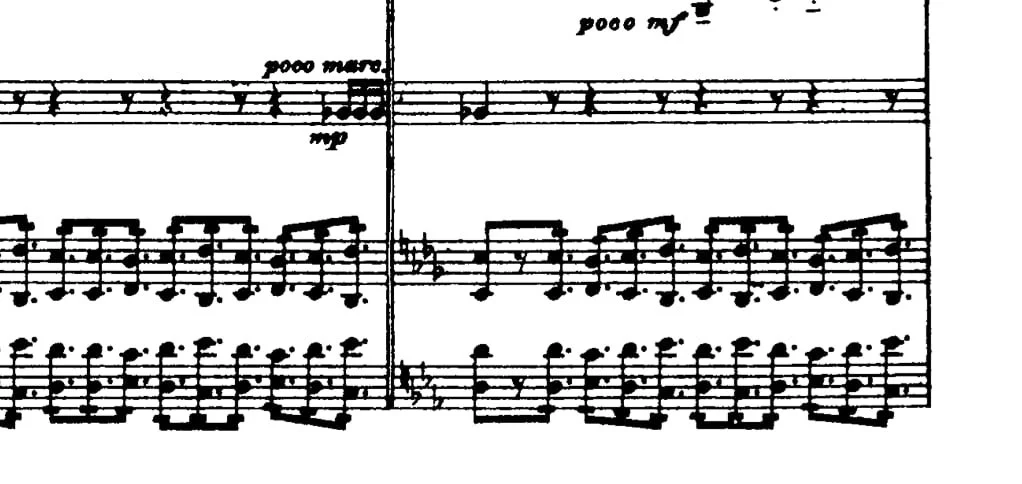
The quietest details do not escape on this remastering.
I’m unsure how Maillard folded in the Quad track, but we get a beautiful perspective of the orchestra. The soundstage is wide and deep and imaging is very effective. The original Philips gives us pleasantries, the new Decca Pure Analogue is an audiophile, musical gem. And the way Meyer has cut it, all of the massive Sibelius climaxes remain focused and coherent. Bravos all around. Maybe the Decca execs will push out a remastered complete Boston/Davis box set! Now, that would be something.
Very highly recommended.
Further information: Decca Pure Analogue